LinkedIn launches Creator Marketplace in the United States and Canada to help B2B brands find, evaluate, and contact creators directly from Campaign Manager. The short answer: it’s a strong signal. LinkedIn is no longer just selling sponsored reach; it is finally structuring creator-brand collaboration with audience data, expertise topics, and partnership tools all in one place.
Creator Marketplace: what LinkedIn really just launched
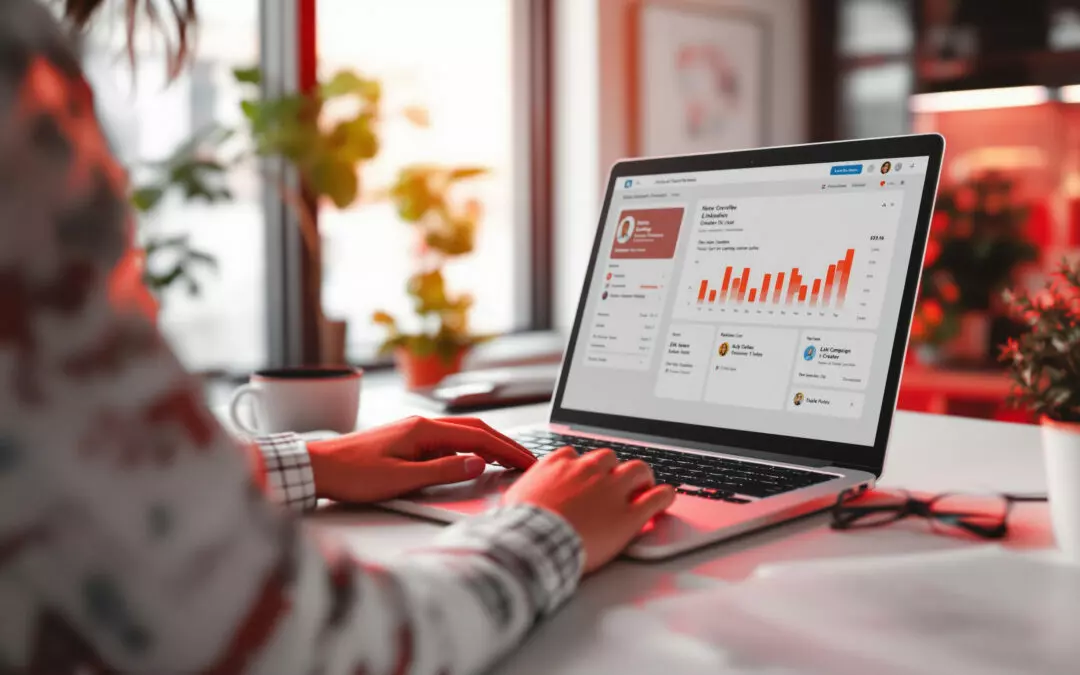
Announced on June 10, 2026, Creator Marketplace is a product designed for advertisers who want to work with creators on LinkedIn without doing a manual search in the feed. The tool is integrated into LinkedIn Campaign Manager and centralizes creator discovery, insights, and the elements needed to make contact.
In practical terms, a marketer can search for creators verified by topic, content expertise, audience, performance, and brand fit. LinkedIn also says advertisers can access creators’ contact information, which shortens a step that is often painful: finding the right email, qualifying the profile, then waiting for a response across multiple channels.
On the creator side, the process is opt-in. Creators can choose to share their information with brands and retain control over several collaboration settings, including the preferred contact email and approvals related to sponsored content. According to the explanation published by Sam Corrao Clanon on June 10, 2026, creator access is by invitation, with activation through a Monetization tab.
At this stage, the initial rollout covers the United States and Canada. Lindsey Gamble also reported on June 16, 2026, that the program is in alpha, available to some creators and brands in North America, and limited to English-language content. So this is a controlled opening, not a global launch.
Why B2B is shifting toward LinkedIn creators
Since 2015, I’ve seen B2B brands treat LinkedIn as a corporate channel: company posts, white papers, lead gen campaigns, recycled webinars. That still works sometimes. But attention has changed. Decision-makers read people before they read company pages.
LinkedIn relies on very clear data from the LinkedIn/YouGov Global B2B Marketing Outlook 2026, conducted among 1,299 B2B marketers in the United States, the United Kingdom, France, Germany, and India between January 14 and February 5, 2026: 77% of B2B marketers say buyers need to know and trust a brand before they engage in a conversation. Even more telling, 82% believe creators strengthen credibility with decision-makers.
On the ground, that’s not surprising. A CFO doesn’t click on a post because it’s “well branded.” They stop because an expert they follow explains budget pressure, a CRM rollout mistake, or a useful take on a market. Credibility comes before conversion.
This logic fits a broader trend in 2026 influencer marketing focused on proof and performance : advertisers want to connect awareness, trust, consideration, and pipeline. LinkedIn is trying to do what Meta and TikTok have already industrialized on the creator side, but with a clearly B2B angle.
What advertisers can do right now
If you manage a B2B brand, don’t treat Creator Marketplace as just a directory. The classic mistake is looking for “a big LinkedIn account” and negotiating a single standalone post. Honestly, on LinkedIn, that format only works if the creator already has clear authority on the topic and the brief gives them room to angle the content.
The right use starts with a mapping of topics. Not “SaaS,” which is too broad. Rather: HR data security, adoption of theGenerative AI by sales teams, compliance in finance, hiring cloud profiles. The more precise the niche, the more credible content the creator can produce.
- Define three priority topics tied to your sales cycle, not just to your product.
- Assess the fit between the creator’s audience and your real decision-makers: function, seniority, industry, geographic area.
- Ask for an editorial angle before approving the partnership, not just a publication calendar.
- Plan sponsored approvals ahead of time, especially in regulated sectors.
- Measure reach, qualitative engagement, company profile visits, and attributable leads separately.
Integration into Campaign Manager matters because it brings creator collaboration closer to media workflows. Social Media Today reported on June 10, 2026, that Creator Marketplace appears in Campaign Manager under a new “Content and Assets” section. For social ads teams, that’s good news: fewer spreadsheets, more continuity between content, targeting, and activation.
That said, don’t confuse the marketplace with strategy. A marketplace gives you access to profiles. It does not replace positioning, the brief, negotiation, or a sharp reading of weak signals. On LinkedIn, a relevant comment from a VP of Sales is sometimes worth more than 500 generic likes.
LinkedIn creators: how to prepare before launch
For creators based outside North America, the temptation will be to wait. Bad instinct. When a platform launches this kind of product in alpha, it watches which categories perform, which profiles are the most reliable, and which content is easiest to monetize. You can already position yourself.
Your profile should tell, in ten seconds, why a brand should pay you. Clear banner, expertise-focused bio, content proof, recurring topics. If your editorial line changes every week between management, AI, productivity, recruiting, and rants, a brand will have a hard time qualifying you.
Also work on your commercial inventory. A sponsored post is just one format. You can offer a series of posts, a LinkedIn Live, a LinkedIn newsletter, a document carousel, an event speaking engagement, or a co-creation with the leadership team. In this niche, it’s better to sell an editorial package than a standalone post.
To turn an audience into a brand asset, review the basics of a monetizable and consistent online presence. The creators who will win on LinkedIn will not necessarily be the most entertaining. They will be the ones who can prove expertise, deliver on an editorial promise, and collaborate without losing their voice.
LinkedIn vs. Instagram, TikTok, and YouTube: not the same game
The comparison with other platforms is useful, but it has limits. Instagram Creator Marketplace has already trained brands to look for creators based on affinity and to manage more structured collaborations; if the topic interests you, ValueYourNetwork analyzed the evolution of Instagram’s creator marketplace. TikTok, meanwhile, has imposed a culture of native content that is fast, often driven by entertainment or product demos.
LinkedIn comes with a different promise: professional credibility, B2B targeting, expertise-based influence. It is not the network where you buy attention alone. You are mostly buying a form of transferred trust, and that is more fragile.
| Platform | Dominant logic | Tool or program mentioned | Key caution for brands |
|---|---|---|---|
| B2B influence, expertise, decision-maker trust | Creator Marketplace announced on June 10, 2026 in Campaign Manager | Initial rollout in the United States/Canada, still selective access according to June 2026 reports | |
| Visual affinity, lifestyle, social commerce, sponsored content | Instagram Creator Marketplace, progressively improved by Meta | Risk of optimizing for reach rather than audience quality | |
| TikTok | Algorithmic discovery, short-form formats, native creativity | Advertising innovations unveiled at TikTok World 2025 | Content that is too ad-like is quickly ignored, even with a good creator |
| YouTube | Long lead time, search, demonstrations, topical authority | Sponsored formats, video integrations, Shorts | Heavier production and attribution that is sometimes slower |
The parallel with TikTok is particularly interesting. The advertising innovations presented at TikTok World 2025 show a platform obsessed with fluidity between creator, content, and performance. LinkedIn is taking the same direction, but with more restrained codes: proof, expertise, business relationship.
Another difference is timing. A good LinkedIn post can keep circulating through comments, shares, and profile visits, but it has to spark a credible discussion. On TikTok, the hook in the first three seconds often rules. On LinkedIn, the first sentence matters, but the credibility of the person speaking matters even more.
BrandWorks, Top Voices 360, and the business signal behind the announcement
Creator Marketplace is not arriving alone. On the same day, LinkedIn announced BrandWorks, a team dedicated to supporting B2B marketers on brand, creative, content, and events. Reuters reported on June 10, 2026 that LinkedIn would expect BrandWorks to generate a $100 million annualized run rate in the next fiscal year, according to a source close to the matter.
Reuters also indicated that BrandWorks would have been launched internally in March 2026 and that its team size would have increased by about 60 % in the following months. These are details reported by Reuters, not data published in a detailed LinkedIn financial table. Even so, they point clearly in one direction: LinkedIn wants to capture a larger share of B2B advertising budgets.
Top Voices 360 provides another clue. Reuters reported that this program would have generated more than $20 million in revenue between May 2025 and May 2026. Here again, the direction is clear: LinkedIn is testing, structuring, then industrializing offers around expert creators.
For brands, the counterargument is worth making. Centralizing search in a marketplace can standardize collaborations and drive up the rates of the most visible profiles. The best opportunities will sometimes remain outside the tool: niche experts, employee advocates, consultants with strong followings in a micro-community. On LinkedIn, scarcity is not always where the interface shows it.
This logic aligns with the growth of professional micro-communities, similar to what ValueYourNetwork analyzes in the micro-cultures on social media in 2026. A smaller but highly qualified audience can carry significant weight in a B2B cycle. Especially when the creator speaks the language of the profession.
ValueYourNetwork supports brands and creators in their social media strategies, from selecting the right profiles to building measurable campaigns; whether you’re an influencer or an advertiser, grow your social media with us and contact us.
FAQ about LinkedIn Creator Marketplace
What is Creator Marketplace on LinkedIn?
Creator Marketplace is a LinkedIn product announced on June 10, 2026 that helps brands find, analyze, and contact creators directly in Campaign Manager. It centralizes discovery, insights, and partnership tools.
Is Creator Marketplace available in France?
No, not at launch according to the available information. The initial rollout concerns the United States and Canada, with access reported as selective in North America and limited to English.
How can creators join the LinkedIn marketplace?
According to the creator explanation published on June 10, 2026, access is by invitation and involves opting in via a Monetization tab. Creators can control certain collaboration information, including the contact email and sponsored approvals.
Why is LinkedIn focusing on B2B creators?
LinkedIn cites its LinkedIn/YouGov 2026 study: 82 % of the B2B marketers surveyed believe creators increase credibility with decision-makers. The platform wants to turn this trust into an advertising and commercial lever.