
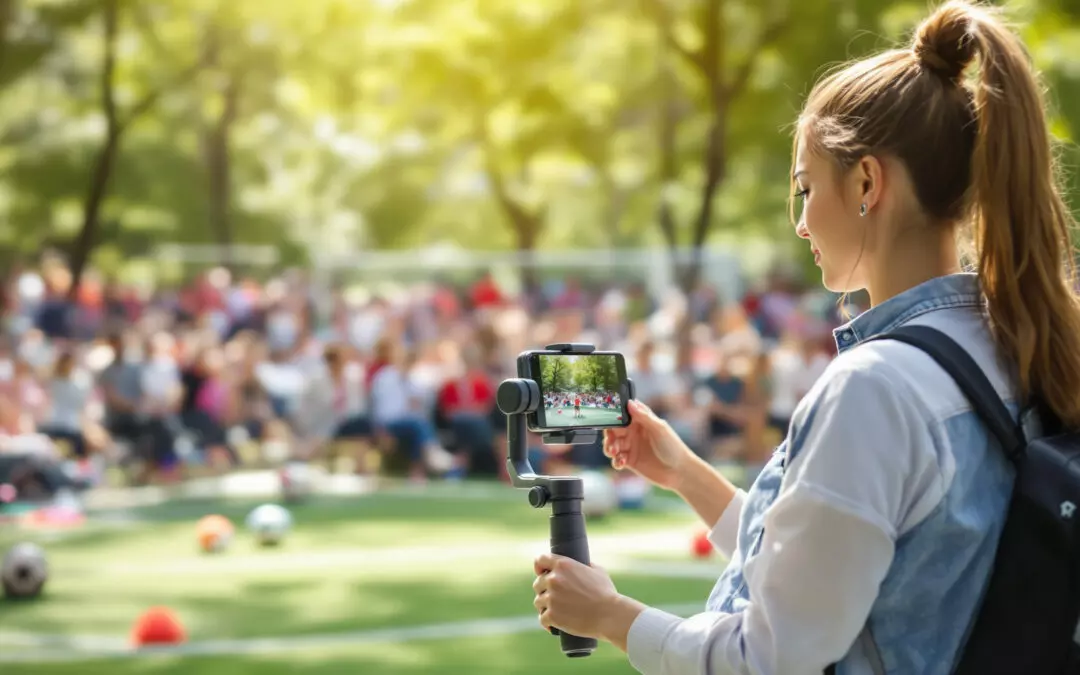
The YouTube FIFA Creator Cup isn’t just a match between influencers—it’s a full-scale test of a sport designed for YouTube, its communities, and its formats. On July 12, 2026, in New York, FIFA and YouTube will bring together creators, soccer legends, and partner brands for a global live event. For creators and advertisers alike, the message is clear: sports content is moving beyond TV highlights to become a continuous audience engagement mechanism.
YouTube FIFA Creator Cup: What's Happening on July 12
The first YouTube FIFA Creator Cup is set for July 12, 2026, at 5 p.m. ET, at Wollman Rink in New York City’s Central Park. The live event will be streamed on FIFA’s official YouTube channel and simultaneously on IShowSpeed’s channel, one of the most influential creators when it comes to turning soccer into a social spectacle.
This distribution strategy speaks volumes. FIFA is no longer content to simply publish content related to the 2026 World Cup: it recognizes that the audience also engages through creators’ channels, their styles, their reactions, and their communities. Since 2015, I’ve seen many sports-influencer campaigns promise to “bring fans closer together.” Here, the difference lies in the infrastructure: YouTube, FIFA, global creators, and native distribution on the platform.
The names announced set the tone: AboFlah, Celine Dept, Zhong, TBJZL, Zias, Jasontheween, CazeTV’s Allan Stag, Coringa, Receba, Séan Garnier, Mercedes Roa, Brittany Wilson, Freda Ayy, Blou, and Marlon. On the soccer side, Cafu and Marco Materazzi are listed as coaches, and Pierluigi Collina as a referee or supervisor. This lineup blends entertainment, soccer culture, and skill, streaming and local communities.
Why YouTube and FIFA Are Stepping Up Their Efforts to Support Creators
The move was planned well in advance. On March 17, 2026, FIFA announced YouTube as its Preferred Platform for the 2026 World Cup, offering creator access, premium content opportunities, and additional options for official media outlets. On June 10, 2026, YouTube unveiled its creator programming for the tournament, claiming a cumulative audience of more than 350 million subscribers for its global platform.
On July 7, 2026, YouTube also reported that creators associated with the YouTube FIFA Creator Cup had a combined total of more than 270 million YouTube subscribers. Even though a subscriber doesn’t guarantee a view, this volume shifts the balance of power: creators are no longer brought in at the end of the process to promote a campaign; they’ve become a distribution channel in their own right.
Another interesting fact: YouTube claims that videos related to the 2026 World Cup from its creator roster had already surpassed one billion views before the event. Sports content performs very well in short-form video, but YouTube has an advantage that TikTok Instagram and others don't offer the same level of continuity between Shorts, long-form videos, live streams, VOD, and connected TV. That's exactly what advertisers are looking for when they want to avoid a campaign that disappears in 24 hours.
To understand this shift, we need to view YouTube as a comprehensive media ecosystem, not just a video platform. The shift toward connected TV, which ValueYourNetwork has already analyzed in its article on Competition Between YouTube and Television in 2026, makes this type of live broadcast much more strategic for sports rights holders.
Sports on social media are changing their format, not just their platform
It would be a big mistake to view the YouTube FIFA Creator Cup as a digital version of a charity match. It’s not the same product. A traditional match relies on the score, the competitive tension, and the TV production. A creator event also relies on behind-the-scenes footage, reactions, personalities, re-editable clips, and commentary.
FIFA has already paved the way for this approach with its YouTube agreement: official media partners can publish extended highlights, behind-the-scenes footage, Shorts, and VOD content. FIFA also specifies that these partners can stream the first ten minutes of each match live on YouTube, as well as select full matches. This is a key detail, as the first ten minutes are often the easiest to leverage for audience acquisition.
On the field, creators have an advantage: they know how to produce content before, during, and after the game. A run into the tunnel becomes a short video. A warm-up becomes a vlog. A funny blooper becomes a viral clip. An interaction with Cafu or Materazzi becomes a highlight reel. Channels that have already mastered the basics detailed in our guide YouTube and Marketing to Grow Your Audience will be able to repurpose the event across multiple formats without giving the impression that they are repeating the same content.
Honestly, this format only works if the production team is willing to accept a certain amount of chaos. If it’s too polished, it loses its creative energy. If it’s too free-form, it can become confusing for brands. The right balance lies in a clear editorial framework: pre-produced segments, segments by creator, live moments, and clips ready for use as soon as the game ends.
What Brands Can Learn from Dove Men+Care and Lay’s
Dove Men+Care and Lay’s have been named official partners of the YouTube livestream. Their involvement makes sense: these brands are looking for opportunities for social, conversational engagement that aligns well with popular sports. But their real challenge isn’t just about appearing during the livestream.
An effective campaign around an event like the YouTube FIFA Creator Cup must take three phases into account: the announcement, the live stream, and follow-up content. On YouTube, value doesn’t end with the broadcast. Long-form videos continue to be recommended, Shorts can circulate for several days, and YouTube Search captures queries related to participants, FIFA, IShowSpeed, or highlights.
| YouTube Format 2026 | Appropriate athletic use | Usual Duration of Value | Brand Watch List |
|---|---|---|---|
| Live | Game, Reactions, Comments, Community Chat | Peak viewership during the event, followed by a replay | Plan for moderation and brand safety |
| Shorts | Goals, skill moves, behind-the-scenes highlights | High potential within 24–72 hours, varying by niche | Don't overload the design with logos or promotional messages |
| Full-Length VOD | Vlog, summary, creative storytelling | Research and recommendations over several weeks | Pay Attention to the Title, Thumbnail, and Retention |
| Smart TV | Group Viewing, Premium Replay | A value similar to that of a media program | Thinking About Readability Without Relying on Chat |
The classic pitfall—especially among advertisers coming from traditional sports sponsorship—is to measure only live impressions. That’s a bad habit. You also need to look at incremental views from replays, creator-generated clips, organic mentions, spikes in brand searches, and the quality of comments. A live sports event featuring creators rarely generates just a single metric; it creates a cluster of signals.
To structure this type of partnership, a brand can draw inspiration from ambassador programs rather than simple product placement. We’ve detailed this in our analysis of the Brand ambassador formats that make an impact : The harmony between talent, timing, and purpose matters more than forcing a presence in every shot.
Designers: How to Take Advantage of This New Sports Aesthetic
The YouTube FIFA Creator Cup will likely inspire many sports, lifestyle, and gaming creators to vie for a spot at the next official event. That’s a good idea—as long as you come up with a unique angle. “I’m going to the game” just isn’t enough anymore. “I’m covering the game from behind the scenes as a French-speaking creator,” “I’m comparing the YouTube live stream to the TV broadcast,” or “I’m exploring soccer culture with my gaming community”—these are examples of a clear editorial promise.
If you’re a creator, structure your content like a short series. An announcement video, two or three Shorts before the event, a live stream or a reaction video, and then a long VOD with behind-the-scenes footage. Most beginners post everything too late. Good timing starts as soon as the topic enters the search trends—not after the event is over.
- Prepare three storylines before filming: one focused on the creator, one focused on soccer, and one focused on behind-the-scenes action.
- Always shoot clean vertical shots for Shorts, even if your main video is horizontal.
- Break down your reaction moments into 15- to 35-second clips that are easy to edit together.
- Track retention, traffic sources, and queries in YouTube Studio starting within the first 48 hours.
- Avoid thumbnails that are too cluttered: on mobile and TV, the face, the gesture, and the context are more effective than tiny text.
Designers who want to take a more professional approach to this process would do well to review the basics of YouTube Analytics to Understand Their Statistics. When it comes to event-driven content, the retention curve and traffic sources quickly reveal whether the audience is there for you, for FIFA, for IShowSpeed, or for a specific moment.
In this niche, a long, highly engaging video is sometimes better than a barrage of impersonal Shorts. Shorts drive discovery; long-form videos build relationships. And for brands, it’s often that relationship that justifies the budget.
The Real Indicator of Sports Marketing Influence
Since 2015, all the platforms have been trying to tap into sports: Facebook with its live streams, Twitter (now X) with real-time conversations, TikTok with viral clips, Twitch with watch parties, and Instagram with Reels and locker room stories. YouTube is entering the fray with a more comprehensive package: a search engine, live streaming, Shorts, on-demand content, monetization, and a presence on smart TVs.
The YouTube FIFA Creator Cup also shows that rights holders are willing to relinquish some control in order to gain wider distribution. This is a cultural shift. For a long time, the sports world guarded its footage like a vault. Now, value also comes from controlled distribution: access to matches, player tunnels, warm-ups, backstage areas, and behind-the-scenes content, as YouTube clarified on June 25, 2026.
One counterargument is worth raising: not all sports will become entertainment spectacles. Highly regulated sports, competitions with fragmented broadcast rights, or brands sensitive to reputational risk will move more slowly. But soccer has a unique power: it speaks to both local and global audiences, it lends itself to humor as well as emotion, and it produces micro-moments that can be leveraged continuously.
For advertisers, the issue is therefore not about “doing what FIFA does.” It’s about identifying events where their brand has legitimacy, and then building a tailored content strategy. A solid strategy often combines macro-creators for reach, expert profiles for credibility, and local micro-creators for conversation. This is exactly the kind of trade-off we discuss in our article on Audience Size and Brands' New Strategies.
ValueYourNetwork supports brands, creators, and organizations that want to turn social media into a driver of measurable audience growth, with a genuine understanding of how these platforms work; whether you are influencer or an advertiser, to grow your social media with us, contact us.
FAQ About the YouTube FIFA Creator Cup
When is the 2026 YouTube FIFA Creator Cup taking place?
The YouTube FIFA Creator Cup is scheduled for July 12, 2026, at 5:00 p.m. ET, at Wollman Rink in Central Park, New York, according to a YouTube announcement on July 7, 2026.
Where can I watch the FIFA Creator Cup live on YouTube?
The event is set to be streamed worldwide on YouTube via FIFA’s official channel, with a simultaneous broadcast announced on IShowSpeed’s YouTube channel.
Which creators are participating in the YouTube FIFA Creator Cup?
YouTube highlighted AboFlah, Celine Dept, Zhong, TBJZL, Zias, Jasontheween, Coringa, Receba, Séan Garnier, Mercedes Roa, Brittany Wilson, and other talents, alongside figures such as Cafu, Marco Materazzi, and Pierluigi Collina.
Why is this event important for brands?
It combines sports rights, global creators, live content, Shorts, on-demand viewing, and commercial partners. For a brand, it’s an activation model that goes beyond visible in-game sponsorship.
Is the YouTube FIFA Creator Cup Replacing Traditional Sports Media?
No. It complements traditional media by catering to different uses: behind-the-scenes content, reactions, creator communities, and short-form content. The change stems primarily from how content is distributed and its lifespan.