
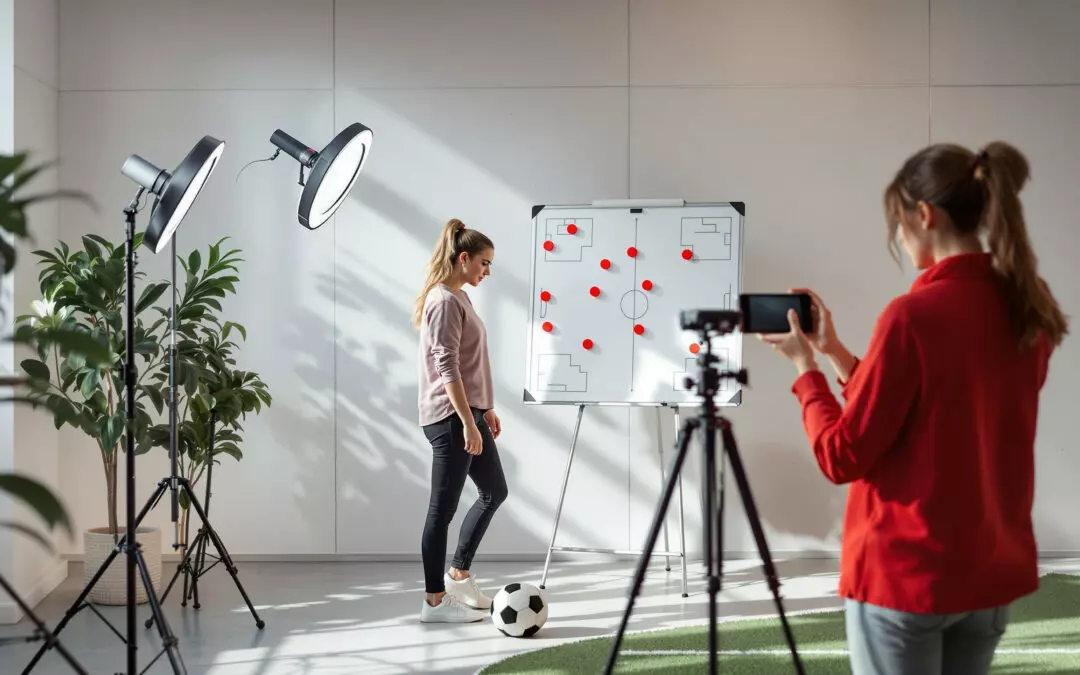
Sports content creators and consultants aren’t completely replacing TV experts ahead of the 2026 World Cup, but they’re already capturing some of their influence: attention, immediacy, and responsiveness. The media still have access to broadcast rights, locker rooms, and former players. Creators, on the other hand, are gaining traction on TikTok, YouTube, Twitch, and Instagram with a more direct tone, short-form content, and daily engagement with fans.
Sports Consultants and Football Creatives: The Real Turning Point Before 2026
Since 2015, I’ve seen brands shift from a simple approach—buying an ad spot during a game—to a much more fragmented strategy: sponsoring a YouTube analysis, placing a product in a Twitch livestream, or co-creating a Reels series with a local micro-creator. Soccer is no exception to this shift. In fact, it’s accelerating it.
The 2026 World Cup, hosted by the United States, Canada, and Mexico, will feature an expanded tournament with 48 teams. More matches, more stories, and more national communities engaged at the same time. In this context, sports consultants and content creators serve as interpreters: they translate the match into social media language, sometimes within ten minutes of the final whistle.
The difference rarely comes down to pure skill. A consultant with top-level experience retains a tactical insight that’s hard to imitate. But a content creator who posts every day has a better grasp of their community’s norms, the inside jokes, the right timing, the thumbnail that gets people to click, and the comment that will make the video go viral.
Scope: The media retain the audience, while creators capture the moments
Traditional sports media outlets remain powerful when they hold the rights or have official access. TF1, beIN Sports, L’Équipe, RMC Sport, and ESPN can attract massive audiences for an event. Their strengths include institutional credibility, consistent editorial coverage, studio segments, and authorized footage.
But social media doesn’t work like a TV schedule. A TikTok video posted during halftime can reach hundreds of thousands of people before the postgame analysis even begins. On YouTube Shorts, Instagram Reels, or Snapchat Spotlight, the algorithm promotes content based on watch time, rewatch rates, and immediate engagement—not on the journalist’s status.
Honestly, when there’s not much going on, the content creators are often better. Between games, they know how to keep fans engaged with a unique angle: Morocco’s likely lineup, Mbappé’s matchup against a fullback, the best-designed jersey, the most hostile stadium. The media reports on it. Content creators craft the narrative.
This reasoning is in line with a broader trend analyzed by ValueYourNetwork on how brands are rethinking audience size : The raw impact carries less weight than before if it does not spark conversation or leave a lasting impression.
| Channel | Leading Force in 2026 | Practical limitation | High-Performance Soccer Format |
|---|---|---|---|
| Sports Television | Broad audience, official rights, legitimacy | Limited interaction, a more formal tone | Pre-game, live coverage, post-game analysis |
| YouTube | Long analysis, referencing, long-term archive | Higher production, fierce competition | Tactical debrief (8–15 minutes), live replay |
| TikTok | Rapid virality, discovery outside of subscribers | Sometimes simplified context, short duration | Spontaneous reactions, playful storytelling, tactical punchlines |
| Community, Reels, Stories, collaborative posts | Reach varies depending on formats and niches | Composition Carousel, Closet Reel, Stories Poll | |
| Twitch | Proximity, time spent together, face-to-face conversation | Sensitive video rights, need for strong representation | Watchalong without video, live discussion, community debrief |
| Business, Sponsorship, Sports Careers | Less suited to fan reactions | Marketing analysis, sponsorship, brand activation |
Expertise is no longer limited to a former player's resume
A veteran sports analyst draws his authority from his firsthand experience: the locker room, competition, pressure, and tactics. That’s invaluable. A former international player can sometimes spot a defensive adjustment or a key detail that the casual observer misses.
The creator, on the other hand, develops a different kind of expertise. He analyzes public data, authorized video clips, lineups, team dynamics, and subtle cues on the players’ social media. Some specialized creators become extremely knowledgeable about a specific team, league, or position. In this niche, it’s sometimes better to have a creator obsessed with Liga MX than a TV generalist parachuted into Mexico in 2026.
The pitfall for beginners: confusing confidence with expertise. A bold statement works well in short form, but it can undermine credibility if it ignores the context. Before entering into a partnership, a brand must consider three things: the quality of the sources cited, the ability to correct errors, and the nuance in post-game analysis.
For advertisers, the challenge is therefore not to choose between content creators, soccer consultants, and media outlets. It’s about coordinating both. The ValueYourNetwork platform is seeing the same trend in the marketing influence strategies that incorporate creators and AI the effective campaigns combine authority, storytelling, and social distribution.
Authenticity: The Weapon That TV Shows Still Struggle to Emulate
A fan doesn’t just follow a creator to learn. They follow them because they recognize their unapologetic bad faith, their favorite team, their accent, their references, and their sense of humor after a loss. This connection sparks long comments, debates, TikTok duets, and live streams that go past midnight.
Sports media outlets have been trying to adopt these formats for several years now: on-camera segments, short clips, vertical video, more free-wheeling analysts on X, and shows also streamed on YouTube. Some do it well. But the relationship often remains one-sided, whereas content creators respond to, engage with, and quote their followers, and tailor their next content based on reactions to the previous one.
Platforms encourage this intimacy. Instagram promotes Stories, the distribution channels and collaborative Reels; TikTok prioritizes formats that encourage repeat viewing and commenting; Twitch turns the chat into a co-host. Changes to the Instagram feed, particularly the increasing level of personalization described in Instagram algorithm analysis, reinforce this trend: content that resembles a conversation is gaining ground.
Be careful: being close to the action doesn’t mean being amateurish. For a brand, sponsoring a player who insults every referee or fuels a toxic rivalry can be costly in terms of reputation. The World Cup also attracts abusive behavior online; this is already a sensitive issue on Facebook, as shown in the ValueYourNetwork article on Planned moderation measures surrounding the 2026 World Cup.
What Brands Need to Buy: Influence, Not Just Audience
A good soccer content creator doesn't just sell impressions. They sell a sense of trust. If their community accepts that they're talking about a fantasy soccer app, equipment, a beverage, or a media offer, it's because the integration fits their tone.
Rates vary significantly depending on the country, platform, exclusivity, schedule, and usage rights. In practice, a World Cup campaign costs more than a typical month, especially on days when the national team is playing. Advertisers must factor in a responsiveness premium: rapid creative approval, a short brief, same-day editing, and publication—sometimes within the hour.
Here's a simple way to make the right choice:
- Check for consistency in sports : A designer with a very club-oriented style may be excellent, but could be a risky choice for a national campaign if his tone is divisive.
- Analyze the comments : Ten thousand views accompanied by meaningful discussions are sometimes better than a hundred thousand passive views.
- Request usage rights : The reuse of a video in paid social media must be specified in the contract; it should not be discovered after publication.
- Prepare the scenarios : victory, elimination, injury, refereeing controversy. Content intended solely to bring joy can become unusable.
- Measure after 24 hours and after 7 days : TikTok is growing rapidly, YouTube is here to stay, and Instagram depends heavily on saving and sharing.
The best campaigns resemble a mini-media outlet. A lead creator drives the narrative, local micro-creators engage the communities, a media outlet lends its credibility, and the brand remains helpful rather than intrusive. For long-term campaigns, ambassador formats remain powerful, especially when they create a recurring event, as ValueYourNetwork explains on Brand ambassador formats that make an impact.
The sports consultant of the future will likely be a hybrid
The question isn't: Will creators replace consultants? The real tension lies in the merging of these roles. Many former players are becoming creators, while some creators are invited onto shows because they bring in an audience and a community perspective.
YouTube has already gotten fans used to long, independent analyses. Twitch has made interactive commentary the norm. TikTok sets the pace. LinkedIn, while more low-key, is becoming a useful platform for discussing sponsorship, media rights, merchandising, and careers. The 2026 World Cup will likely be the first World Cup where this entire spectrum of content is visible at all times, from the locker room to memes.
My view is clear: the consultants who will survive in the media will be those who are willing to become “formats,” not just “roles.” Solid expertise without a distinct identity gets lost in the flow. Conversely, a creator without discipline will eventually be exposed as soon as a situation demands more than just an emotional reaction.
ValueYourNetwork has been supporting brands and influencers with these decisions since the earliest major waves of social influence: choosing creators, formats, measurement, brand safety, and social media strategy. Whether you’re an influencer or an advertiser, grow your social media presence with us and contact us to plan your soccer-themed campaigns.
FAQ on Soccer Consultants and Sports Consultants
Can soccer analysts replace sports consultants on television?
Not entirely. TV consultants retain their official access and on-the-ground experience, but creators have the edge when it comes to proximity, responsiveness, and social engagement.
Which platform should you choose for a soccer influencer campaign in 2026?
TikTok is best for quick reactions, YouTube for in-depth analysis, Instagram for community engagement, and Twitch for lengthy discussions. The right choice depends on the stage of the game and your goal: brand awareness, consideration, or conversion.
How can you gauge the credibility of a soccer creator?
Look at the quality of the sources, the accuracy of the postgame analysis, the tone of the commentary, and the willingness to admit a mistake. Viewership alone isn't enough.
Are soccer micro-creators useful for the 2026 World Cup?
Yes, especially when it comes to reaching national, local, or club-based communities. Their reach is more limited, but their conversion rates can be higher depending on the niche.