
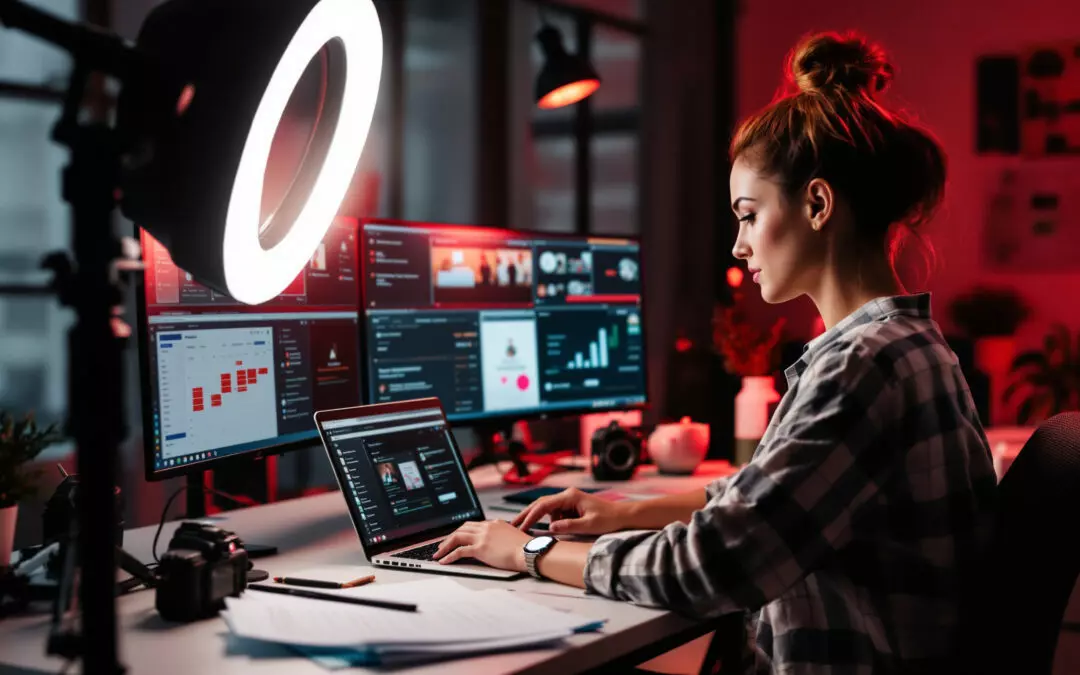
A influencer rarely comes from a simple post published between two coffees. The job combines creation, negotiation, legal compliance, data analysis, community management, and algorithmic pressure. Since the French law of June 9, 2023 on commercial influence, success requires as much rigor as creativity. The good news: with clear organization, this 100-mph pace becomes manageable.
Influencer: what everyday life is really hiding
Since 2015, I have watched the profession move from handcrafted product placement on Instagram to multi-platform campaigns managed like media launches. Today, an influencer does not just sell their audience. They sell an ability to capture attention, produce quickly, remain credible, and prove impact.
A typical day often looks like a tightly packed stack: TikTok monitoring in the morning, filming Reels or Shorts, approving a brief, editing, replying to comments, reporting, sending invoice reminders. The beginner’s trap is underestimating invisible time. A 45-second video can take three hours if it includes concept, script, lighting, subtitles, music, rights, brand approval, and format adaptation.
Honestly, the profiles that last are not the ones that post the most. They are the ones who know how to say no. No to a brand that is off-brand editorially, no to a brief that is too locked down, no to a product promise that is impossible to defend in front of their community.
Platform speed calls for a method, not guesswork
Instagram, TikTok, YouTube, Twitch, LinkedIn, and Snapchat do not reward the same signals. On TikTok, retention in the first few seconds remains decisive. On YouTube, the title-thumbnail combo and watch time carry a lot of weight. On LinkedIn, the conversation in the comments can extend a post’s reach for several days.
On Instagram, Reels have introduced a more fast-paced grammar, but Stories still hold strong commercial power for links, promo codes and day-to-day monitoring. Creators must also keep an eye on product changes, such as the new ways Reels are used on large screens, discussed with Instagram on Samsung Smart TV, because content consumption is no longer limited to mobile.
TikTok demands an almost brutal sense of timing. A trend can be dead within 72 hours. By contrast, YouTube Shorts can support a longer strategy if short formats lead to long-form videos, live streams, or a newsletter. For advertisers, this difference changes everything: a flash activation is not managed like a six-month partnership.
| Platform | Strong format in 2026 | Signal to watch out for | Field usage |
|---|---|---|---|
| Reels, Stories, carousels | Retention, saves, DM replies | Brand image, social commerce, promo codes | |
| TikTok | Short videos, live shopping depending on the market | Watch time, completion rate, shares | Quick discovery, trends, creative tests |
| YouTube | Shorts, long videos, live | Miniature CTR, average duration, generated subscriptions | Authority, educational content, affiliate marketing, evergreen content |
| Twitch | Long-form live content | Time spent, active chat, subs | Engaged community, gaming, entertainment, events |
| Expert posts, native videos, PDF carousels | Qualified comments, clicks, invitations | B2B, recruiting, thought leadership, product launch | |
| Snapchat | Spotlight, Stories, vertical content | Repeat views, completion rate, audience proximity | Young audiences, behind the scenes, sports, entertainment |
A good rule of thumb: don’t mechanically recycle the same content everywhere. A TikTok script that moves too fast can come across as superficial on LinkedIn. A Twitch live stream cut into a clip can work on YouTube Shorts, but only if the context is reintroduced in one sentence.
Commercial influencer marketing is now a regulated profession
France adopted Law No. 2023-451 on June 9, 2023, published in the Official Journal on June 10, 2023, to regulate commercial influencer marketing and curb abuses. This law specifically defines commercial influencing and influencer representatives, regulates or prohibits the promotion of certain products and services, and requires greater transparency for edited or AI-generated content.
This issue has changed the discussions between brands and creators. Before, some briefs would add a “partnership” mention at the end of the document, almost as an option. Today, the clear identification of the commercial collaboration must be considered from the creative concept onward, not added at the last minute.
The DGCCRF checked more than 300 influencers in 2022 and 2023 on Snapchat, TikTok, Facebook, Instagram, X/Twitter, Telegram, and YouTube: 98 in 2022, then 212 in 2023. Nearly half showed irregularities, with 35 warnings, 81 compliance orders, and 35 criminal referrals. That’s not trivial.
Another operational benchmark: the official 2026 guide indicates that starting January 1, 2026, written contracts with mandatory clauses are required above €1,000 before tax. Below that threshold, written form is not mandatory, but I still recommend it. A simple signed exchange protects you better than a vague brief sent in DM.
Organization: keeping up the pace without damaging credibility
An influencer’s life at full speed quickly becomes unmanageable if everything depends on the inspiration of the day. The most resilient creators work with an editorial calendar, a library of hooks, quote templates, a validation tracking table, and a weekly analysis routine.
A simple system is enough at the start. You can split your content into three columns: audience content, proof content, and commercial content. The first attracts, the second reassures, the third monetizes. If your account posts only sponsored content, community fatigue sets in quickly.
- Set aside half a day each week to produce multiple short pieces of content in a row.
- Keep 20 to 30 % of your schedule open so you can react to trends without disrupting your commitments.
- Prepare a fact sheet for each brand: approved claims, legal notices, links, codes, publication dates.
- Always ask who approves on the advertiser’s side and within what timeframe.
- Archive proof of publication, analytics, and approval exchanges throughout the campaign.
Storage and sharing of assets quickly become a serious issue when multiple brands, editors, or agents are involved. To avoid lost files and outdated creative versions, cloud methods for influencer campaign management save a very concrete amount of time.
What brands need to understand before briefing
A brand that works with an influencer is not buying a human billboard. It is entering into a trust-based relationship that has already been built with an audience. The more the brief tries to smooth out the creator’s tone, the less the campaign feels alive.
The best brief fits on one clear page: objective, non-negotiable message, legal constraints, deliverables, dates, usage rights, tracked metrics. The rest should leave room for the creator’s writing. In this niche, three well-defined constraints are better than fifteen corporate sentences that kill the natural feel.
Advertisers also need to stop comparing every platform at the same cost per view. A TikTok view discovered in the feed does not have the same value as an eight-minute YouTube watch or a recommendation built into a Twitch live stream. To frame your expectations, the approach to influencer marketing measurement in 2026 helps connect awareness, consideration, and conversion.
On the B2B side, LinkedIn deserves a specific strategy. An expert influencer posting about cybersecurity, HR, or finance cannot be managed using the codes of a beauty haul. The recommendations related to product launch on LinkedIn are especially useful for aligning creators, sales teams, and the content team.
Responsibility, AI, and trust: this is where the new sorting happens
ARPP stated that in the first half of 2025, its Responsible Influence Observatory scanned 194,000 pieces of content and had experts review 9,810 confirmed commercial collaborations. The announced overall compliance rate was 84%. That is encouraging, but the details tell the market story better.
According to ARPP in 2025, certified creators showed 76% compliant content and 13% non-compliant content, compared with 51% compliant and 39% non-compliant for non-certified creators. The organization also said it counted more than 2,200 certified creators. However, a live page viewed on June 24, 2026 displayed “Certified profiles: 0” and “Registered profiles: 0,” which looks like a display issue or an unresolved database issue that has not been publicly explained, not a data point to interpret on its own.
Artificial intelligence adds another layer. Avatars, generated faces, beauty filters, and retouching must be disclosed when they fall within the scope set by regulations. The public is getting better at spotting artificial content; transparency is no longer just a legal requirement, it also protects the relationship.
AI tools can help with scripting, rough cuts, subtitling, and analysis. But an influencer who hands over their voice to a machine quickly loses what made them valuable. On LinkedIn in particular, overly standardized content is penalized by readers’ indifference, a topic also seen in the emerging uses of AI on LinkedIn in 2026.
ValueYourNetwork has been supporting creators, influencers, community managers, and advertisers for years in their social media strategies, with a hands-on approach to influencer marketing. Whether you are an influencer or an advertiser, to structure your campaigns and grow your social media with us, contact us.
FAQ about the influencer profession
How do you become an influencer in 2026?
You need to choose a clear niche, post regularly on one or two priority platforms, analyze the content that captures attention, and build a clear relationship with your community. Monetization comes after audience proof and trust.
Does an influencer have to sign a contract?
According to the official 2026 guide, a written contract with mandatory clauses is required above €1,000 excluding tax starting January 1, 2026. Below that, it is not mandatory, but a written agreement is still strongly recommended.
Which platform should you choose to start as an influencer?
TikTok is well suited to fast discovery, Instagram to daily engagement, and YouTube to lasting authority. The right choice depends on your niche, how comfortable you are on video, and the time you can devote to production.
How does a brand identify a good influencer?
It looks at editorial consistency, comment quality, regularity, performance by format, and transparency in collaborations. A small but highly credible creator can sometimes sell better than a large account with low engagement.