
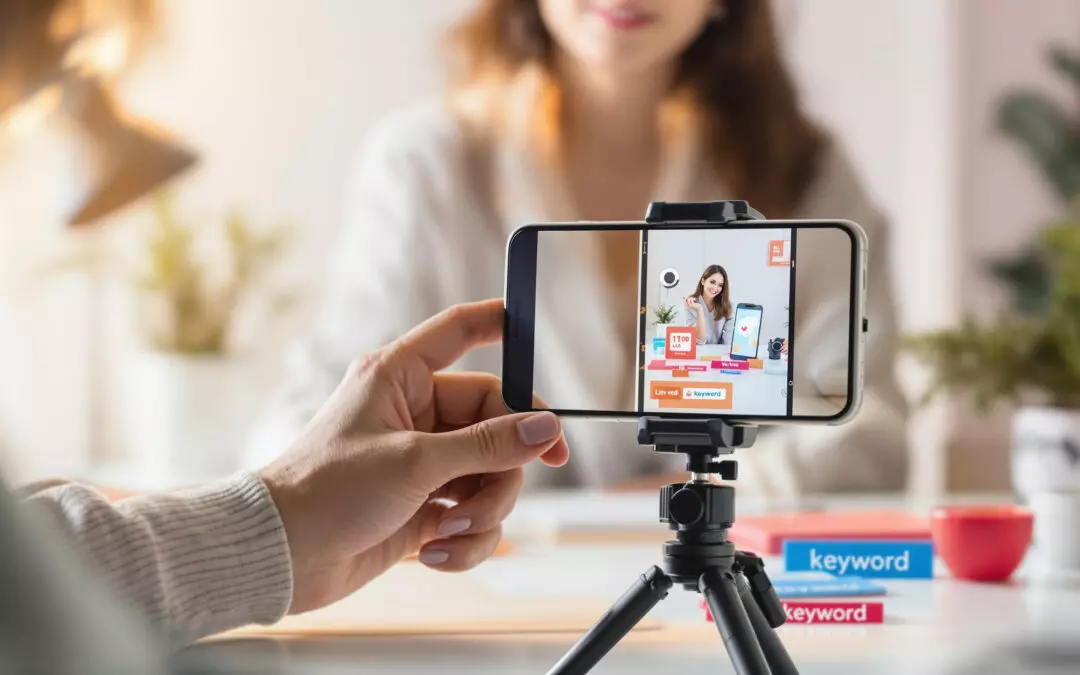
DMs via Instagram comments are coming to ad testing on Meta with an option called Reply to Keywords. The idea: when a user comments on an Instagram ad with a chosen keyword, a private message can be sent automatically. For brands, it’s a direct bridge between public engagement and DM conversion. For creators, it’s a clear signal: comments are becoming a real CRM entry point.
DMs via Instagram Comments: What Meta Is Really Testing
On August 25, 2026, Jon Loomer reported the appearance of a Reply to Keywords option in Meta’s ad setup tools. Social Media Today picked up the story the same day. At this stage, no confirmation from Meta’s newsroom has been found: so this is clearly a test observed in the interface, not a widespread rollout.
The identified process is simple. The advertiser defines up to five keywords or phrases. When a user types them in a comment under an Instagram ad, a private DM can be sent automatically, with the option to include a link, a phone number, or an email address, according to Jon Loomer’s report.
This is exactly the kind of mechanism social media teams have been asking for for years: less friction, more context, and a more natural transition into conversation. But be careful. Honestly, this format only works if the keyword is obvious, the promise is clear, and the DM offers a real follow-up—not just a promotional copy-and-paste.
The interesting thing, from a practical standpoint, is the shift in commentary toward relationship-building. Instagram is no longer just a feed for visibility; the platform is increasingly focusing on signals of intent. Commenting “guide,” “price,” or “code” under an ad says much more than a like.
Why Meta Is Moving Comments to DMs
Since 2015, we’ve seen Instagram move from easy organic reach to short-form content, then to algorithmic recommendations and private conversations. Stories got users used to replying via DM. Reels shifted attention. The distribution channels have reinforced the logic of closeness. DM via Instagram comments fits into this continuity.
Meta knows that brands want to measure more than just impressions. A keyword-triggered comment is similar to a micro-conversion: the user saw the ad, understood the call to action, and then agreed to engage. It’s a higher-quality action than a cold click, especially in niche markets where a purchase requires a preliminary question.
On Instagram, creators have already caught on to this with automations like “comment GUIDE and I’ll send it to you.” Tools like Manychat have popularized this approach for organic posts, but comments on ads have long been trickier, depending on the settings and integrations. For example, a Manychat discussion from March 2026 mentioned difficulties with promoted Instagram posts, except when using a Partner App trigger in Meta Ads Manager.
This test can therefore help eliminate an operational gray area. For a brand, that’s invaluable. For a creator selling a course, a waitlist, a digital product, or an affiliate code, it’s potentially a new way to turn an engagement ad into conversational acquisition.
How This Option Affects an Influencer Campaign
The real issue isn’t automation. It’s the quality of the intention. In an influencer campaign, a public comment under sponsored content provides visible social proof; a DM, on the other hand, lets you send the right link, the right offer, and the right response without exposing the entire conversation.
For example, in a campaign with an ambassador, you could create an ad using a creator’s Reel where the call to action asks users to comment with “routine,” “quote,” or “menu.” The comment feeds the algorithm, and the private conversation engages the user right when their interest is at its peak. It’s a cleaner approach than a single link in the bio, especially if multiple creators are participating.
This reasoning is consistent with what we are already seeing in the systems ofimpact-driven brand ambassadors : The format that works best isn’t always the most spectacular one, but the one that generates measurable results. A good creator knows how to spark conversation without being pushy. A good advertiser then knows not to ruin the DM with a message that’s too aggressive.
The common beginner’s mistake is choosing a keyword that’s too generic. “Yes,” “info,” or “promo” can create noise, especially if users comment without any intention to buy. In this niche, it’s better to use a keyword related to the offering: “audit,” “size,” “recipe,” “schedule,” “simulator.” Sometimes there’s less search volume, but more value.
Rules, Limits, and Constraints to Be Aware of Before Testing
Instagram already offers Private Replies via API as of 2026: a business account can send a private reply to a comment left on a post, Reel, or Story. This feature therefore exists independently of the “Reply to Keywords” test, and it imposes limitations that advertisers should not ignore.
Meta's Instagram API documentation states that private replies must be sent within 7 days of the comment. For Instagram Live, the window is limited to the duration of the live stream. Another very important point: after a private reply, follow-up messages are only allowed if the recipient replies, and only within a 24-hour window after that reply.
To put it another way, the DM isn’t permission to invade a prospect’s private space for weeks on end. It’s a brief window of opportunity. If your first message doesn’t immediately deliver the promised value, you’ll miss the window for a response.
Information available as of August 25, 2026, also indicates that the previews spotted were related to Instagram. Jon Loomer noted that the feature did not appear to work with Facebook ad placements at this stage, and Social Media Today also reported its presence in Instagram’s advertising tools. Therefore, you should avoid building a multi-platform media plan around a feature that is still in testing.
| Function or context | Verified data | What this means |
|---|---|---|
| Reply to Keywords, Meta Ads Test | Reported on August 25, 2026, by Jon Loomer; republished by Social Media Today | Feature to watch—not yet a public standard confirmed by Meta |
| Trigger Words | Up to five keywords or phrases, according to the report dated August 25, 2026 | Choose a few triggers that are closely related to the user's intent |
| Contents of the Automated Homework Assignment | May include a link, phone number, or email address, according to Jon Loomer | Prepare a short message with a single call to action |
| Instagram Private Replies API | Already supported in 2026 for comments on posts, Reels, or Stories | The "comment on DM" feature already exists on the professional API side |
| API Submission Window | Private reply within 7 days of the comment; Live stream limited to broadcast only | It's impossible to follow up on leads too late without losing the context |
| Follow-up Messages | Only if the recipient replies, and then within 24 hours | The first homework assignment should elicit a meaningful response |
How to Start Preparing Your Ad Creatives and Keywords Now
The best time to prepare for this type of technology is before it becomes widely available. Brands that wait until it’s fully rolled out often end up with poorly written messages, overwhelmed support teams, and forgotten UTMs. It’s a classic scenario.
Start by aligning three elements: the requested comment, the promised benefit, and the DM’s content. If the Reel says, “Comment ‘GUIDE’ to receive the checklist,” the DM should provide the checklist or a direct link. Not a generic page, not a four-step sign-up process.
- Choose a specific keyword that’s easy to type and consistent with your audience’s language.
- Write a DM that's no more than a few lines long, with just one action expected.
- Add a trackable link if you're linking to a landing page or an online store.
- Prepare a personalized response for users who reply to the DM.
- Keep an eye out for comments that don't include keywords: they often reveal objections that your ad hasn't addressed.
For creators, this feature can also change the way captions are written. Instagram carousels become more explanatory, Reels more direct, and the comment section serves as an invisible button. If you’re working on your educational content, the approach through Caption per slide on Instagram can help you write a more natural call for comments.
From an advertiser’s perspective, don’t confuse volume with performance. A playful keyword might generate a lot of comments but few leads. Conversely, a more engaging keyword like “diagnosis” or “fitting” filters better. The visible engagement rate may seem lower, but the quality of the conversation is often better.
Instagram, TikTok, YouTube: The Real Difference in Approach
Instagram has a historical advantage: direct messaging is a native feature there. Ever since Stories were introduced, replying to a brand or creator privately is nothing out of the ordinary. On TikTok, the focus is more on discovery and virality; comments are everywhere, but private interactions don’t always flow as smoothly, depending on usage patterns and audiences.
YouTube works differently. Comments tend to stick around longer there—especially under long videos—but private conversations aren’t at the heart of the product. LinkedIn, on the other hand, can generate highly targeted B2B conversations, particularly with Collaborative posts on LinkedIn, but the tone you want to convey is less easy to automate. A DM that sounds too mechanical stands out immediately.
Instagram, then, falls somewhere between impulse and relationship. An ad Reel can grab attention, a comment can signal interest, and a DM can drive conversions. It’s this continuity that makes Meta’s test appealing to brands in beauty, food, fashion, coaching, tourism, events, and education.
This development also confirms a broader trend: social media is bringing content, messaging, and commerce closer together. ValueYourNetwork regularly analyzes this trend in its reviews of Social Media Trends for 2026, where we see platforms prioritizing proximity signals over simple reach. Reach is still useful. Conversation drives more sales.
Accurate Measurement: Key Performance Indicators to Track
If “Reply to Keywords” becomes more widely available, we’ll need to avoid a common mistake: judging the campaign solely by the number of DMs sent. An automated DM is not automatically a qualified lead. It’s an entry point into the funnel.
The metrics to track should cover the entire process: comment-to-impression rate, percentage of comments containing the keyword, open or response rates (when available in your tools), clicks on the sent link, post-click conversions, and the quality of human responses. For an influencer campaign, include a breakdown by creator: some profiles generate lower volume but much more targeted requests.
The creator’s credibility will carry a lot of weight. A call for comments works best when the audience trusts the recommendation. This is consistent with the current shift toward The Role of Influencer Marketing in Building Credibility : Audiences respond less to artificial mechanisms and more to content where the usage feels authentic.
One last practical tip: Test two levels of call-to-action. Use a “Get the guide” version to attract a broad audience, and a “Get a quote” or “Choose my size” version to qualify leads. You’ll quickly see which audience is looking for content and which is looking for a solution.
ValueYourNetwork supports brands and creators with these social media strategies, from the creative concept to performance tracking; whether you’re an influencer or an advertiser, contact us to grow your social media presence with us.
FAQs About Direct Messages via Instagram Comments
What is the Instagram comments-based DM feature Meta is testing?
This is an advertising test called “Reply to Keywords”: a comment containing a defined keyword under an Instagram ad can trigger the automatic sending of a private message. The test was reported on August 25, 2026, by Jon Loomer.
How many keywords can you set in "Reply to Keywords"?
According to Jon Loomer's report dated August 25, 2026, this feature allows you to specify up to five keywords or phrases. It's best to choose just a few and link them directly to the offer.
Does the automatic DM feature also work on Facebook?
The available information indicates that the test shown in the interface pertained to Instagram. At this point, we should not assume that it is available on Facebook ad placements.
Can you reach out to a user again after sending them a private DM on Instagram?
When using Private Replies via the API, follow-up messages are only allowed if the recipient replies, and only within 24 hours of their reply. The first message must therefore be immediately useful.