
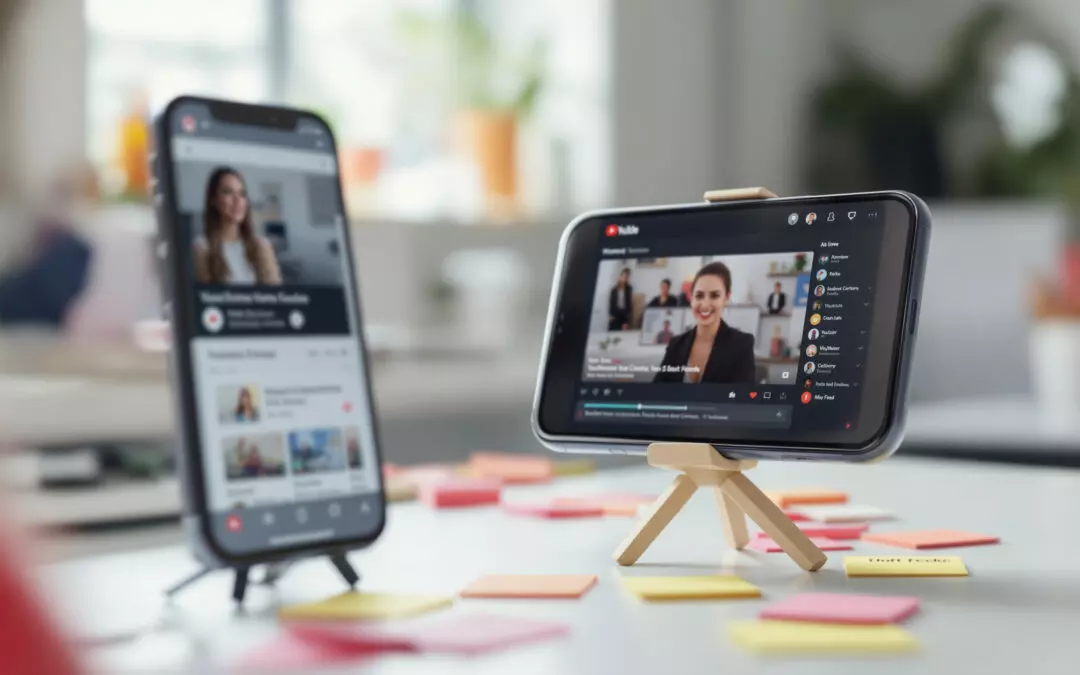
YouTube’s personalized feeds allow certain users to create multiple recommendation feeds based on a prompt and then pin them to the top of the home page. Since the experiment announced by TeamYouTube on August 24, 2026, eligible accounts can keep up to 8 active feeds. For creators and brands, the message is clear: YouTube is testing a more intentional, less passive homepage.
YouTube Custom Channels: How They Actually Work in 2026
Specifically, the user selects the “Custom Feed” tab on the YouTube homepage, types in what they want to watch, and YouTube generates a stream of videos based on that request. The prompt can then be edited directly in the text box at the top of the feed, which changes the recommendations displayed.
The current experiment involves viewers in the United States using Android, iOS, and desktop devices, with their language settings set to English and their viewing history enabled. This last point is no small matter. Without viewing history, YouTube loses some of the behavioral context that fuels its recommendation systems.
On mobile, these feeds replace the traditional topic chips for users included in the test. On desktop, topic chips remain visible. Since 2015, YouTube has often tested changes first with small groups—sometimes for months—before rolling them out more widely or quietly discontinuing them. At this stage, it’s therefore better to refer to this as a serious experiment rather than a global rollout.
What YouTube is trying to address with these feeds
It’s a well-known problem: YouTube’s recommendations are powerful, but sometimes too broad. After watching three videos on Japanese cooking, the algorithm might keep suggesting recipes for two weeks, even if you were just looking for something specific that day. YouTube’s personalized feeds add a layer of explicit control: the user says what they want to watch right now, not just what they watched yesterday.
This trend comes after a long period during which platforms have optimized passive consumption. TikTok Instagram introduced the permanent algorithmic feed, Instagram bolstered Reels, and YouTube pushed Shorts. If you want to understand this logic from a user perspective, check out ValueYourNetwork’s analysis on the passive scrolling among Gen Z provides some good context.
Honestly, it’s also a response to algorithm fatigue. Many users don’t necessarily want fewer recommendations; they want recommendations that are easier to understand. One feed for “long-form videos on apartment renovations,” another for “NBA analyses under 15 minutes,” and yet another for “DaVinci Resolve tutorials for beginners”: this approach to navigation is closer to a search intent than to mere continuous entertainment.
Impact on Creators: Titles, Niches, and Watch Time
Videos watched from a personalized feed are added to the standard watch history. As a result, they can influence the recommendations on the main homepage. YouTube also notes that these views typically count toward creators' watch time and monetization, just like views from other recommendation surfaces.
The pitfall for creators would be to believe that only exact keywords matter. YouTube already knows how to interpret a topic based on the title, description, chapters, automatic captions, engagement, and post-click behavior. But with user-generated prompts, natural phrasing carries more weight. A video titled “I Tested 5 Microphones for Podcasting” may be interpreted differently than one titled “Best Microphone for Beginner Podcasters in an Apartment.”
In this niche, it’s best to prioritize precision. Creators who are already refining their editorial packaging, engagement, and themed playlists have a head start. Those who post vague titles like “My new video” will become even harder to find in intent-driven feeds.
To take your analysis a step further, link this test to your data in YouTube Analytics : traffic sources, click-through rates, average viewing time, new viewers versus subscribers. If YouTube’s personalized feeds become more widespread, we’ll need to monitor traffic fluctuations related to “navigation features” much more closely.
What Advertisers Need to Anticipate
For advertisers, the issue isn’t just about media. It’s an indicator of how user intent is segmented. A user who creates a feed titled “beginner trail running gear” isn’t in the same frame of mind as a user who passively stumbles upon a sports video between two comedy clips.
YouTube has not announced any specific ad targeting related to personalized feeds. It would therefore be unwise to promise buying segments based on these prompts. On the other hand, when it comes to influencer strategy, the message is quite clear: campaigns will need to align with more specific editorial niches, featuring creators identified for their expertise—not just their overall audience.
Since 2015, the campaigns that perform best on YouTube have combined three elements: a strong connection between the creator and the topic, a format that aligns with the channel’s style, and a message that’s concrete enough to hold viewers’ attention even as they skip through videos. Personalized feeds reinforce this approach. A video that’s highly relevant to a specific topic can rise to the top of a targeted feed if the content truly meets the viewer’s needs.
Brands that use YouTube as a customer acquisition tool must also keep up with advertising trends on the platform, particularly AI-powered ad formats. ValueYourNetwork has already analyzed the YouTube ads placed during the highlights of videos, a good example of more refined contextual targeting.
Comparison with Shorts, TikTok, and Twitch
YouTube’s personalized feeds do not replace Shorts, channel subscriptions, or search. They add a new entry point. This distinction is important: TikTok relies heavily on behavioral discovery, Twitch on live streaming and community engagement, and YouTube on a unique blend of search, recommendations, subscriptions, and a long-form library.
What makes YouTube unique is the longevity of its content. A tutorial video can continue to generate views for months, sometimes even years, depending on the niche. Personalized feeds could enhance this longevity if the algorithm highlights good older videos in highly targeted feeds.
| Platform or format | Dominant Logic in 2026 | Primary User Signal | Implications for Creators |
|---|---|---|---|
| Classic YouTube Home | Joint Recommendation | History, clicks, satisfaction, subscriptions | Work on title, thumbnail, retention, and consistency |
| YouTube Custom Channels | Prompt-Guided Recommendation | Written request, history enabled, interactions | Define the niche, topic, and video promise |
| YouTube Shorts | Quick Vertical Exploration | Short retention, re-viewing, swipe | An eye-catching hook and a series of recognizable formats |
| TikTok For You | Behavioral Distribution | Viewing time, interactions, weak signals | Test extensively, iterate quickly, embrace instability |
| Twitch | Community Live | Live Presence, Chat, Loyalty | Building Connections, Personality, and Interaction |
If you're torn between short-form and long-form content, compare their uses rather than their trends. The article TikTok vs YouTube helps establish the right criteria, while our analysis Twitch or YouTube for streaming provides more insight into the live and community aspects.
Action Plan for Adapting Your Supply Chain Right Now
Waiting for a rollout in France would be convenient. Too convenient. Creators who succeed on YouTube are often those who plan their editorial strategy before the platform makes a change visible in their metrics.
- Map out 5 to 8 viewing intentions Around your channel: learn, compare, shop, get inspired, stay up to date, solve a problem, have fun, and improve your skills.
- Rewrite Your Weak Headlines with a clear topic, without making the title sound robotic. Example: Choose “How to Set Up Your YouTube Lighting with a Single Lamp” over “Video Setup Finally Ready.”
- Create useful playlists aligned with these goals. Even though the feeds are private on the user side, your playlists help YouTube understand the structure of your content.
- Add clear chapter headings for long videos when the content lends itself to it. Chapters provide semantic cues and enhance the viewing experience.
- Analyze the videos that drive traffic from non-search sources. An increase in views or suggestions may indicate good thematic alignment.
For channels focused on Shorts, don’t make the mistake of posting only clips without context. Personalized feeds may prioritize videos whose subject is recognizable within a few seconds, even in a short format. The ValueYourNetwork guide on the visibility through YouTube Shorts remains useful for organizing vertical sequences in a way that is easier to read.
One final practical point: privacy. Personalized feeds are private and unique to each user’s account. Other viewers cannot find or access them. For a brand, this means it does not “own” these feeds. It earns its place in them by providing consistent, useful content that viewers watch for a sufficient amount of time.
ValueYourNetwork supports creators, influencers, and advertisers with their YouTube strategies, social media and influence, with a practical understanding of formats and algorithms; whether you are influencer Whether you're an advertiser or a business, grow your social media presence with us and contact us.
FAQ on YouTube Custom Feeds
How do I create custom YouTube feeds?
Eligible users select the "custom feed" tab on the YouTube homepage, then enter a prompt describing what they want to watch. The feature is currently being tested with logged-in viewers in the United States who have English set as their language and their viewing history enabled.
How many custom YouTube feeds can you keep?
The pilot program announced on August 24, 2026, allows users to keep up to 8 active threads at the same time. Inactive threads expire after a few weeks.
Are YouTube custom feeds visible to other users?
No. YouTube states that these streams are private and specific to the user's account. They cannot be viewed or searched for by other viewers.
Do views from a custom feed count toward monetization?
Yes. Videos watched from a custom feed count toward your watch history, creator watch time, and monetization according to YouTube's standard rules.