
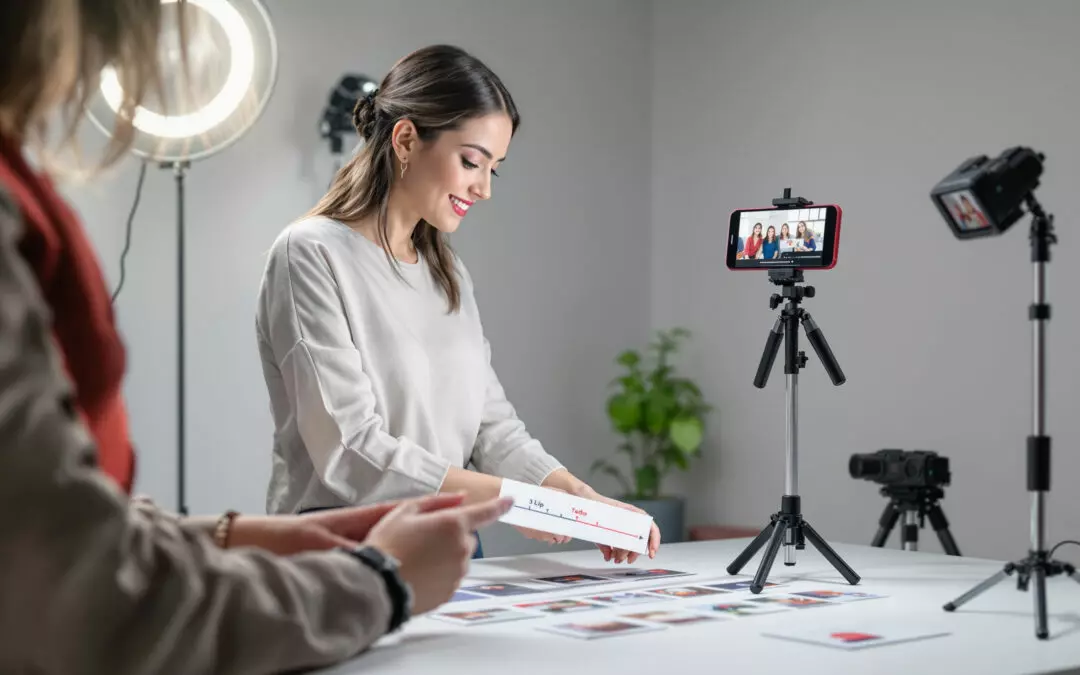
Turning a long video into short-form content involves extracting 10 standalone clips, each centered on a single idea, and then adapting them to the formats of TikTok, Reels, Shorts, and LinkedIn without simply copying and pasting the same edit everywhere. The most reliable method: identify the peaks in viewer engagement, isolate the key phrases, reformat the content to a 9:16 vertical aspect ratio, add readable captions, and publish natively.
Turn long videos into short-form content without losing your voice
It’s a classic trap—I’ve seen it dozens of times since 2015: cutting a 45-minute interview into 60-second clips, then calling that a strategy. That rarely results in good content. A short clip needs to have its own beginning, build-up, and conclusion—even if it comes from a Twitch livestream, a YouTube podcast, or a LinkedIn webinar.
Your style doesn’t disappear during editing just because the video is short. It disappears when you cut out your pauses, your concrete examples, your personal phrasing, and your somewhat bold perspectives. On TikTok or Instagram Reels, personality matters just as much as the information, especially in niches like expertise, beauty, sports, personal finance, or B2B.
Before you start editing, set a simple rule: each short video should fulfill a single promise. Not two. Not three. If the long-form video covers product launches, storytelling, pricing, and algorithms, you already have several formats, but they shouldn’t overlap.
A Practical Method for Extracting 10 Formats from a Single Video
A long video becomes profitable when you treat it as raw material, not as finished content. Start by reviewing the structure: introduction, anecdotes, objections, examples, mistakes, demonstration, conclusion. The best clips are often hidden in the middle, not in the first few minutes.
On YouTube, use your retention data if the video has already been published. Sections where the audience stays engaged, rewinds, or comments on an idea are worth editing. For more on this topic, check out the ValueYourNetwork guide on Analysis of YouTube Statistics helps you identify useful signals before boarding.
- 1 attention-grabbing line: a sentence that poses a clear problem or expresses a strong opinion.
- 2 practical tips: each one includes a step you can take starting tomorrow.
- 2 common mistakes: very effective in Reels and Shorts, because the format creates immediate tension.
- 1 quote or statement: short, memorable, almost editorial in tone.
- 1 scene or method: preparation, script, filming, choice of angle.
- 1 before-and-after photo or example: ideal for demonstrating the result without having to say a word.
- 1 FAQ answer: a specific question that your audience is already searching for on Google or TikTok.
- 1 CTA or summary: not an intrusive ad, but rather a natural invitation to watch the full video, sign up for a newsletter, or take advantage of an offer.
Honestly, the “full video summary” format doesn’t work as well as people think. Short-form platforms prioritize content that stands on its own. The link to the full version comes later, once the clip has already provided value.
Adapt each clip to the platforms, not the other way around
Converting long-form videos into short-form content requires significant technical adaptation. Since the update rolled out on October 15, 2024, YouTube Shorts classifies square or vertical videos up to 3 minutes in length as Shorts, with a clear recommendation for the 9:16 vertical aspect ratio. Instagram Reels supports multiple aspect ratios, but sponsored Reels must be under 90 seconds and in full-screen vertical 9:16 format.
TikTok, on the other hand, allows videos recorded within the app to be up to 10 minutes long and uploads to be up to 60 minutes long, but that’s no reason to post long videos. For most topics, a 25- to 55-second clip packs the most punch. On LinkedIn, especially in B2B, native video is the way to go: LinkedIn video ads require a direct upload, and the platform supports vertical formats such as 4:5.
| Platform | Recommended format in 2026 | Valid period for an extract | Point of vigilance |
|---|---|---|---|
| YouTube Shorts | 9:16 vertical aspect ratio; square aspect ratio accepted | 15 seconds to 3 minutes, depending on the subject | Vertical or square videos up to 3 minutes long are classified as Shorts |
| Instagram Reels | 9:16 for full-screen viewing | 15 seconds to 90 seconds if sponsorship is planned | Keep text and messages out of hidden areas |
| TikTok | Native vertical | 20 to 60 seconds for most expert content | Long-form uploads exist, but you have to grab people's attention quickly |
| 4:5 or portrait orientation, depending on the campaign | 30 to 90 seconds | Post directly rather than sharing a third-party link |
The same excerpt can be shared on four platforms, but not with the same presentation. On LinkedIn, a simple, embedded headline and an opening sentence focused on a business challenge work best. On TikTok, the clip needs to get to the point faster, with less context and more visual evidence.
The edit that keeps your style recognizable
Style is all in the details. The rhythm of your speech. Your expressions. The way you challenge a common misconception. If you polish it too much, you end up with a video that’s too polished—and therefore forgettable.
Keep the brief pauses that convey intent, but remove the transitions. Add captions, yes, but avoid animations that steal the spotlight from the message. Safe zones are essential: on Reels, Shorts, and TikTok, interface buttons can obscure a word, a price, a product name, or a CTA.
A good short edit often begins half a second before the key line. This lead-in builds momentum. Conversely, cutting exactly at the punchline can sometimes create a robotic effect, which is particularly noticeable among creators who automate everything using an editing tool.
If your content is story-based, craft the opening as a mini-story. Readers can use the ValueYourNetwork tips to build on it at Storytelling from the very first seconds, because that's often where the difference between a passive view and a genuine sign of engagement lies.
Mistakes That Cause Short Videos to Lose Reach
First mistake: posting the same file everywhere. Platforms can tell when content is recycled, but more importantly, audiences react differently. A very authentic clip might go viral on TikTok but come across as too theatrical on LinkedIn.
Second mistake: confusing subtitles with visual overload. Words should help the viewer follow along, not turn the screen into a slide. For brands, this is even more sensitive: effective visual brand content relies on a clear hierarchy, as explained by ValueYourNetwork in its analysis of the branded visual content.
Mistake #3: Forgetting the promise of the long-form video. If your short video promises to reveal “the detail no one notices in an influencer contract,” the full video must actually address that detail. Otherwise, you’ll gain a view but lose credibility.
One last, less obvious pitfall: ignoring subtle cues in the comments. A question that comes up three times under a short post is sometimes worth a new script. On Instagram, also keep an eye on shares and saves, not just likes; ValueYourNetwork goes into detail about the mechanics of the Instagram engagement rate to prevent readers from reading too quickly.
Turning Long-Form Video into Short-Form Content for an Influencer Campaign
From an advertiser’s perspective, repurposing changes the ROI of a collaboration. Instead of asking for “a TikTok video,” you can plan a longer video shoot with usage rights, then create 10 different assets: a teaser, product demonstration, objection handling, review, tutorial, comparison, behind-the-scenes footage, FAQ, human moment, and CTA. In this niche, it’s better to negotiate usage rights from the start rather than reaching out to the creator after the fact.
The creator must remain recognizable. If the brand takes over the entire production with a style that’s too promotional, the content often loses its organic credibility. The right approach: frame the required messages, but let the creator retain their own style, pace, and vocabulary.
Effective influence strategies in 2026 combine native content, paid amplification, and smart repurposing. To build this framework, advertisers can rely on the ValueYourNetwork analysis of the Marketing influence strategies involving creators and AI. AI can help identify moments, but it can't decide on its own what sounds right.
A good editorial brief also specifies what is off-limits: no quotes taken out of context, no opinions turned into excessive endorsements, and no CTAs added unless the creator has explicitly included one. This rigor protects both the brand and the talent.
ValueYourNetwork supports creators, brands, and social media teams with their social media strategies, from editorial planning to measurable influencer campaigns; whether you are an influencer or an advertiser, contact us to grow your social media presence with a hands-on approach.
FAQ: Turning a Long Video into Short-Form Content
How can you quickly turn a long video into short-form content?
First, identify 10 standalone clips, then edit each clip around a single idea. Next, reformat them to 9:16, add clear subtitles, and export a version optimized for each platform.
How long should a short clip from a longer video be?
Aim for 20 to 60 seconds for TikTok, Reels, and Shorts, unless the idea requires more context. YouTube Shorts allows videos up to 3 minutes long for vertical or square videos, but the length should be justified.
Can you post the same clip on TikTok, Instagram, and YouTube Shorts?
Yes, but tailor the headline, the body copy, and sometimes the duration. Simply copying and pasting reduces your chances of resonating with each audience.
What tools should you use to trim a long video?
Tools like Adobe Premiere Pro, CapCut, Descript, or DaVinci Resolve may be suitable depending on your skill level. The most important factor is your editorial choices: the tool cannot replace your judgment regarding pacing and context.