
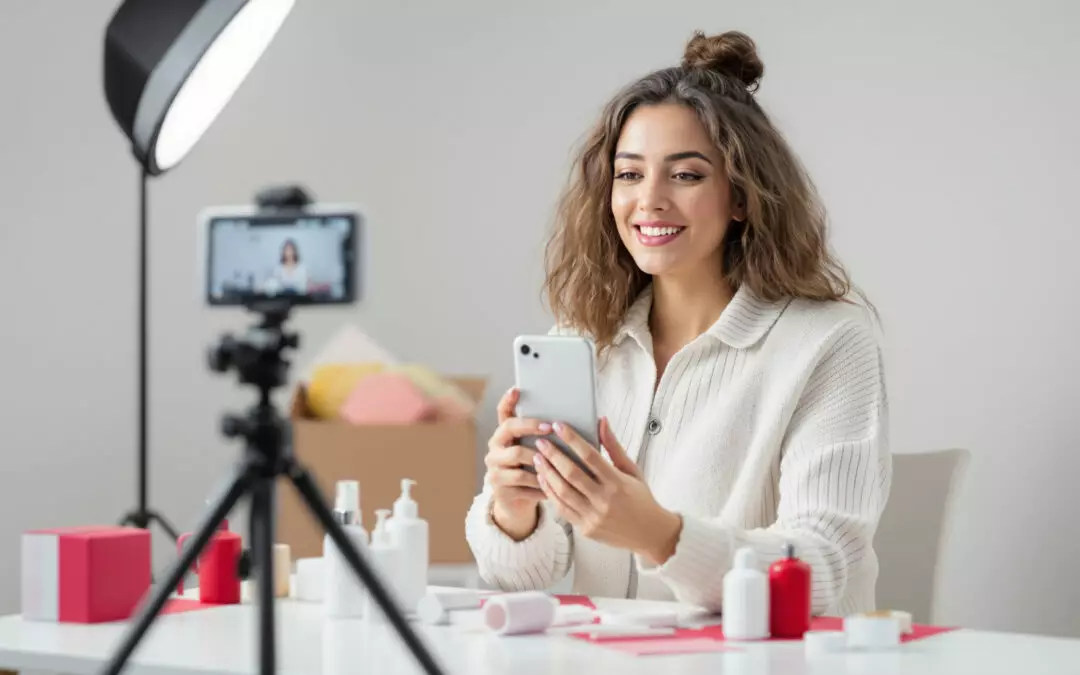
YouTube Shopping 2026 is accelerating sharply: YouTube announced a 13-fold increase in gross merchandise volume over two years and more than 1.3 million affiliate creators in September 2026. However, these figures do not mean thirteen times more unit sales or a doubling of creator revenue. Above all, they confirm the convergence of influence, affiliate marketing, and paid amplification.
What does YouTube Shopping 2026’s 13-fold growth really mean?
The 13-fold growth announced by YouTube in September 2026 concerns GMV, or gross merchandise volume, generated by its affiliate program over two years. GMV represents the total value of products sold. YouTube has published neither a starting amount, nor the number of orders, nor the median revenue per creator.
This distinction changes the entire analysis. An increase in GMV may result from a greater number of affiliate creators, more merchants, a higher average order value, or better conversion. It does not prove that every channel is earning thirteen times more.
Reuters confirmed that the program reached 1.3 million enrolled creators in September 2026. YouTube also announced availability in 35 countries before the end of 2026, including support for international product tagging. Native affiliate marketing is therefore evolving from a monetization feature into an international commercial infrastructure.
Another indicator deserves more attention in daily operations: according to Google, YouTube Shopping product tags generated more than twice as many clicks in 2026 as links placed in descriptions. This refers to clicks, not doubled revenue. The tag shortens the distance between the demonstration and the product page, which explains part of the gap.
Why are YouTube Shopping and Shorts converging in 2026?
YouTube Shopping 2026 now connects product tags to YouTube Shorts, long-form videos, and livestreams. According to official YouTube help documentation, a test conducted in 2026 associated relevant tags in Shorts with an average increase of up to 8 % in views compared with untagged videos.
The word “relevant” matters. In practice, artificially placing a product on a viral video undermines trust and often generates poorly qualified clicks. Honestly, a shopping Short only works if the product solves the problem shown on screen or directly contributes to the result achieved.
YouTube also said in March 2026 that advertisers amplifying creator videos in Shorts recorded, on average, a 30 % increase in conversion lift. This metric measures the incremental effect of a campaign; it does not guarantee 30 % in additional sales for every activation.
The claim of a 60 % increase in Shorts partnerships requires the same clarification. YouTube stated in March 2026 that creators sharing their channel data appeared 60 % more often in advertisers’ search results. This is increased visibility in the partner search tool, not a measured 60 % increase in signed contracts.
| Indicator | Announced result | Correct interpretation |
|---|---|---|
| YouTube Shopping GMV | x13 over two years | Gross merchandise value, not creator revenue |
| Affiliate creators | More than 1.3 million | Program enrollments in September 2026 |
| Tags versus links in descriptions | More than twice as many clicks | Click performance, not doubled commissions |
| Relevant products in Shorts | Up to 8 % more average views | Result of a YouTube test conducted in 2026 |
| Amplified creator videos | 30 % average conversion lift | Average incremental effect announced for Shorts |
| Channel data sharing | 60 % more appearances | Visibility in advertiser searches, not completed contracts |
This development complements organic tools such as YouTube Shorts interactive stickers. The two approaches remain distinct: a sticker supports interaction or subscriber acquisition, while a Shopping tag organizes a path to purchase.
Who can use the YouTube Shopping affiliate program?
Since March 2026, YouTube has opened its Shopping affiliate program to creators eligible for the YouTube Partner Program starting at 500 subscribers. Access covers YouTube Shorts, on-demand videos, and livestreams, subject to eligibility and program availability in the creator’s country.
This threshold does not automatically turn a small channel into a profitable store. A limited audience concentrated around a specific intent—for example, camera equipment reviews or beauty tutorials—may convert better than a general-interest audience ten times larger.
In the United States, Amazon joined the program in August 2026. Eligible creators can tag Amazon products and earn commissions in Shorts, long-form videos, and livestreams. The practical implications of this integration are detailed in our analysis of Amazon affiliate marketing on YouTube.
Attribution is not necessarily limited to the product displayed. In 2026, a YouTube Shopping commission may come from the tagged product or another eligible product purchased on the merchant’s website after the click. You therefore need to analyze outbound clicks, conversions, and commissions together, without attributing every payment solely to the item presented.
How can you create YouTube Shopping content that converts?
Effective YouTube Shopping content starts with a demonstrated use case, places the tag when intent emerges, and measures views, clicks, orders, and commissions separately. Creators should select only a few products, clearly explain their role, and maintain a useful editorial angle. An overly broad catalog scatters attention and weakens the recommendation.
The most reliable method consists of five steps that can be applied as early as your next post:
- Choose a product that already aligns with your audience’s searches and comments.
- Show the product in use before listing its features.
- Place the tag during the demonstration or immediately after the result, rather than randomly.
- Compare the click-through rate and commission per thousand views across YouTube Shorts, long-form videos, and livestreams.
- Keep a comparable group of untagged content to avoid attributing every variation to the Shopping feature.
Beginners’ biggest mistake is optimizing only for views. A Short with broad reach may attract a cold audience and generate fewer commissions than a long tutorial answering a purchase-related search. In a technical niche, 20,000 highly purchase-intent-driven views are often better than a poorly aligned viral surge.
For advertisers, the right dashboard connects exposure, clicks, orders, basket size, and amplification cost. This approach aligns with the challenges of Measuring influencer campaigns : reach and engagement remain useful, but they are no longer enough to establish a creator’s commercial contribution.
How should brands and creators negotiate in 2026?
In 2026, a YouTube Shopping campaign can combine a creation fee, an affiliate commission, and a media budget to amplify the content. This structure compensates three different types of value: production, attributed sales, and the right to use the video. Contracts should separate these items and specify their respective durations.
In September 2026, Google introduced localized international affiliate links, Creator Partnerships Boost, and paid amplification of Shopping content. The line between influencer partnerships and performance media is becoming less distinct. The creator produces an asset that can sell organically, generate a commission, and be turned into an advertisement by the brand.
Between August 22 and October 31, 2026, a U.S. test allowed certain selected creators to receive $500 per eligible Shopping Short or video under six minutes when the content was amplified by a participating brand. This limited bonus is neither a standard rate nor compensation available to everyone. It should not be confused with the former YouTube Shopping Shorts bonus mentioned in other campaigns.
Regarding the contract, check the amplification period, territories, cropped formats, exclusivity, and data access. An attractive commission can become inadequate if the brand receives several months of advertising usage without an additional fee. Conversely, the advertiser must ensure product availability: paying for media on a video featuring an out-of-stock item disrupts the continuity of the customer journey.
This mechanism brings YouTube Shopping closer to social commerce models already deployed elsewhere, notably TikTok Shop in Europe. However, YouTube retains a specific advantage: the same product can be demonstrated in a few seconds, tested in depth in a long-form video, and then sold live.
ValueYourNetwork supports influencer and social media strategies with a practical understanding of formats, measurement, and partnerships. Whether you are an influencer or an advertiser, grow your social media presence with us and contact us to structure your next campaigns.
FAQ about YouTube Shopping 2026
Does YouTube Shopping really multiply sales by 13?
YouTube Shopping multiplied its GMV by 13 in the two years leading up to September 2026, according to YouTube. GMV measures gross merchandise value, not the number of sales, profit, or individual creator revenue.
Have YouTube creators’ Shopping revenue doubled?
No verified data provided in 2026 demonstrates a general doubling of creators' Shopping revenue. Google indicates that YouTube Shopping tags generated more than twice as many clicks as links in descriptions, which is a different metric.
Do you need 500 subscribers to access YouTube Shopping?
The YouTube Shopping affiliate program has been available since March 2026 to certain creators eligible for the YouTube Partner Program who have at least 500 subscribers. Access also depends on the country and the eligibility criteria applied by YouTube.
Can you tag Amazon products in YouTube Shorts?
Eligible U.S. creators have been able to tag Amazon products in YouTube Shorts since August 2026. The integration also covers long-form videos and livestreams, with compensation in the form of commissions on eligible purchases.
Did Shorts partnerships increase by 60 % in 2026?
YouTube did not establish a 60 % increase in concluded Shorts partnerships. In March 2026, the platform indicated that creators sharing their channel data appeared 60 % more often in searches conducted by advertisers.