
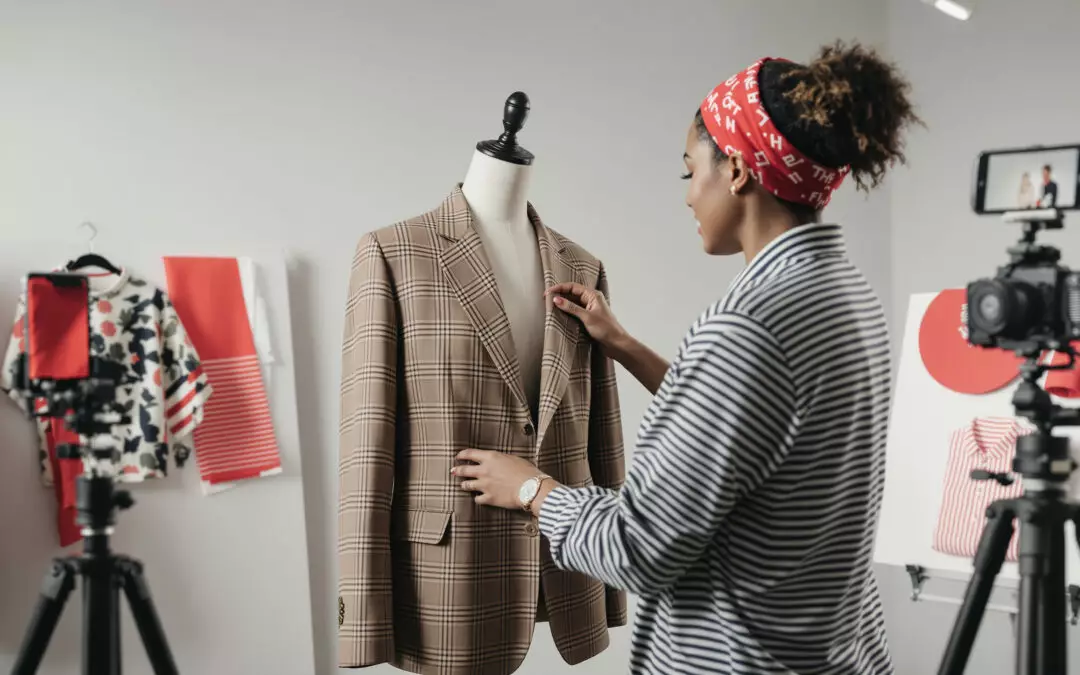
Co-creation influencer transforms a one-off campaign into a product designed with a creator and then marketed to an identifiable community. In 2026, Celio Women takes this approach further with “The essentials, as seen by…”: each month, a female creator reinterprets a piece from the women’s wardrobe. The brand is no longer simply renting an audience. It is establishing an editorial, commercial, and community-driven recurring feature.
What is influencer co-creation in 2026?
Influencer co-creation is a campaign format in which a brand and a creator participate in designing a product or capsule collection. The responsible commercial influencer marketing guide published by the Union des marques in 2025 defines it as bringing the two worlds together to create a joint offering.
The difference from product placement lies in the nature of the contribution. In a traditional placement, the product exists before the creator becomes involved: the creator presents it, tests it, or incorporates it into content. In co-creation, the creator’s sensibility must leave a verifiable mark on the offering, whether through a cut, color, accessory, name, or use case.
This change extends an evolution that has been underway for several years: creators are no longer merely advertising spaces. They are becoming editorial partners, sometimes resembling small media brands. This transformation is detailed in our analysis of media creators in 2026.
Pay attention to the terminology. Adding a name to an already finalized product is not enough to prove creative participation. The contract, timeline, and content must be able to specify what the creator proposed, decided, or approved.
Why do brands prefer a recurring collection?
A recurring collection turns influencer co-creation into an identifiable series rather than an isolated activation. Each launch brings a different product, face, and community, while the brand maintains a consistent promise. This cadence multiplies opportunities to communicate without repeating exactly the same campaign.
Celio Women provides a clear example. In 2026, the “L’essentiel vu par…” program successively pairs Sissy Mua with a sportswear outfit, Camille Cerf with a shirt, Isabeau de la Tour with a little black dress, Styleto with a striped polo, and Mayadorable with a blazer. Each profile brings a distinct style and set of community codes into the same commercial framework.
Repetition also creates anticipation. A monthly launch can fuel teasing, reveals, manufacturing details, try-ons, in-store availability, and customer content. Honestly, a single capsule often produces too brief a spike if the brand plans neither an editorial follow-up nor content repurposing.
This approach aligns with marketing content strategies in 2026 built around recognizable recurring appointments. Consistency does not come from using one permanent creator, but from having a concept solid enough to accommodate multiple personalities.
How does Celio Women go beyond simple product placement?
Celio Women makes the creators’ contributions tangible in the characteristics of each garment. In September 2026, Styleto worked on a short, boxy silhouette, a double collar, white topstitching, a matching headband, and even a polo shirt for dogs. In October 2026, Mayadorable paired her blazer with an interior pocket for lipstick.
Styleto’s “stylish set” included a striped polo and matching headband, sold for 29.99 euros in September 2026 according to Celio. The matching dog polo was offered online for 19.99 euros. Wearing the polo throughout the summer before revealing the collaboration on September 21, 2026, also gave the launch an observation phase followed by an explanation phase.
The Mayadorable blazer, launched online and in stores on October 5, 2026, was priced at 59.99 euros. Its oversized cut, brown Prince of Wales pattern, and lipstick pocket connected the garment to a recognizable personal universe. In this niche, one immediately shareable detail is better than ten creative approvals that remain invisible in the finished product.
| Project | Launch | Product and price | Evidence of participation or mechanism |
|---|---|---|---|
| Styleto x Celio Women | September 2026 | Polo and headband set at €29.99; dog polo at €19.99 | Boxy cut, double collar, topstitching, coordinated accessories |
| Mayadorable x Celio Women | October 2026 | Blazer at €59.99 | Oversized cut, brown Prince of Wales pattern, lipstick pocket |
| Bacci x Benoît Chevalier for Centrakor | September 30, 2026 | Queen Box at €20 according to the trade press | Limited edition of six styles, presale TikTok Earned shopping traffic and in-store presence |
The table shows three different levers: functional personalization, stylistic signature, and a limited assortment. The Bacci x Benoît Chevalier Queen Box brought together mascara, lip gloss, lipstick, eyeshadow, highlighter, and a “Queen Team” pin in certain Centrakor stores. The product thus became the central vehicle for the collaboration, not merely a filming accessory.
How do you build a recurring influencer co-creation?
A recurring influencer co-creation requires a stable framework and visible creative freedom. The brand must define the category, price, production constraints, and frequency, then reserve concrete product decisions for the creator. Without an explicit division of responsibilities, the collaboration risks becoming a disguised late-stage approval process.
The work begins before casting. You must choose a serializable idea, then seek creators whose habits, aesthetics, and communities open up complementary territories. Follower count does not replace this compatibility, especially when platforms distribute content less predictably and the power of communities sometimes exceeds algorithmic reach.
Here are the steps to lock down before the first launch:
- Define the recurring concept, its frequency, and the elements that will remain identical from one edition to the next.
- Document the creator’s expected contribution: design, use cases, detail selection, testing, or storytelling.
- Validate industrial feasibility, retail price, quantities, and the distribution channel before announcing the launch.
- Prepare a content sequence covering teasing, reveal, demonstration, availability, and customer feedback.
- Plan the usage rights for the name, image, and content, as well as the rules for commercial transparency.
- Set product-specific metrics, then organize an actionable review for the next edition.
The cadence must never exceed the capacity for design or sell-through. A monthly edition, as with Celio Women in 2026, requires programming prepared well in advance; Celio also indicated that its 2026 casting had already been planned by the end of 2025. An improvised recurring mechanism quickly ends up producing interchangeable capsules.
Which metrics measure success beyond views?
The success of an influencer co-creation is measured first through product-related data: sales, sell-through rate, margin, average order value, qualified traffic, and new customers. Views, impressions, and interactions describe the story’s distribution, but they demonstrate neither conversion nor the profitability of a recurring collection.
In 2026, Celio reported more than 40 million multiplatform impressions for the campaign announcing Celio Women. This figure indicates overall exposure, not the performance of each capsule. No public total sales, conversion rate, or results by creator were identified in 2026 for the monthly program.
This absence is instructive. High visibility may accompany a successful initiative, but it does not prove it. Advertisers must compare social data with inventory, in-store sales, online sales, and periods of unavailability, in line with an approach in which Reach and engagement are no longer enough to measure influence.
On the creator side, also track comments that specifically mention the product, restock requests, saves of useful content, and spontaneous reuse after launch. A spike on the day of the reveal matters less than sustained demand two or three weeks later. For a limited edition, however, sell-through speed must be interpreted in light of the quantities actually available.
ValueYourNetwork supports social strategies built around communities, content, and measurable objectives. Whether you are an influencer or an advertiser, contact us to grow your social media presence with an activation tailored to your brand.
FAQ about co-creation between brands and creators
What is the difference between a capsule and product placement?
A capsule collection involves creating or customizing an offering marketed for a defined period. Product placement primarily compensates the presentation of an offering already developed by the brand.
Can a micro-influencer co-create a product with a brand?
A micro-influencer can co-create when they bring niche expertise, specific use cases, or a community aligned with the product. The relevance of their contribution and their audience’s purchasing power matter more than any universal follower threshold.
How much time should be planned to launch a collection with a designer?
The timeline depends on the category, prototypes, production, and distribution; no single timeline applies. A brand must factor in casting, contractual approvals, product testing, manufacturing, and the editorial calendar before announcing the collaboration.
How can you prove that an influencer genuinely co-created a product?
The evidence rests on decisions attributable to the creator: cut, composition, function, color scheme, assortment, prototype, or use. Launch content may show these choices without disclosing confidential industrial information.