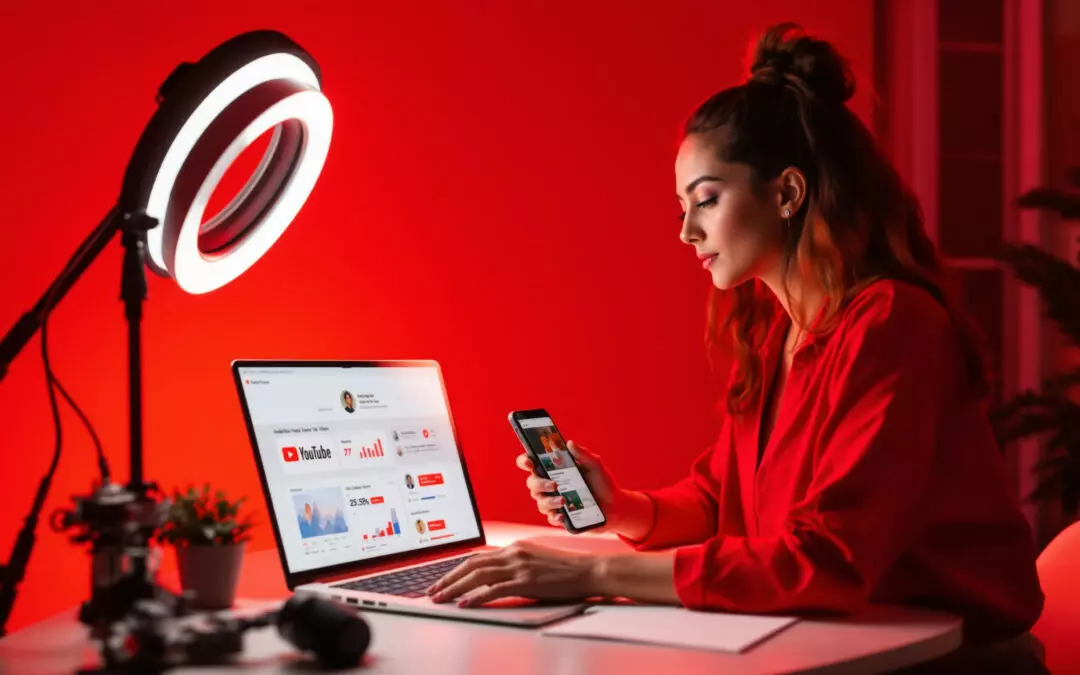
The influencer profession was born when YouTube began paying creators in 2007, then when Instagram turned social visibility into a business tool in 2016. One created media revenue; the other industrialized brand collaboration. Since then, being an influencer has no longer meant simply publishing: it means producing, measuring, negotiating, disclosing, and retaining an audience.
The influencer profession starts with YouTube
YouTube launched in 2005 as a user-generated video platform. At the time, the reflex was simple: post, share a link, and hope to be picked up on a blog or forum. The shift came in 2007 with the pilot of the YouTube Partner Program, which allowed popular creators to make money from their original videos.
On the ground, it was the first serious signal sent to creators: your content can become an asset. Not just a showcase. A well-ranked video that is watched for a long time can continue generating views months later, whereas a social post often disappears within a few hours in the feed.
This logic shaped the first professional habits: polished thumbnails, search-oriented titles, consistent publishing, and an understanding of retention. The YouTube creator didn't just learn how to entertain. They learned to think like a media company.
Instagram gave the influencer profession a commercial face
Instagram, publicly launched in October 2010 by Kevin Systrom and Mike Krieger, brought something else: desirability. A photo, a style, a sense of closeness. Before Reels, before sponsored Stories at scale, Instagram established a direct link between personal image and product recommendation.
In 2016, professional profiles, Insights statistics, and integrated advertising tools changed the game. Brands could look at reach, impressions, clicks, and audience data. For creators, it marked the start of a more structured negotiation: they were no longer selling just a “pretty community,” but measurable access to an audience.
In 2017, Instagram introduced the “paid partnership” tag. This technical detail carried a lot of weight. It standardized transparency, made it easier to share performance with brands, and created a clearer boundary between spontaneous recommendation and paid content. Honestly, that's when many advertisers began to treat creators as a media channel in their own right.
The trap that beginners still ignore: a highly aesthetic Instagram account is not enough. Without save rates, DM replies, story clicks, or traceable sales, the beauty of the feed quickly becomes an expense that's hard to justify.
Two platforms, two business models for creators
YouTube and Instagram did not create the same type of influencer. YouTube initially favored the creator-director, capable of holding attention through a long video, building a content library, and monetizing through advertising. Instagram favored the creator-influencer, very strong on imagery, everyday trust, and product integration.
That difference is still visible in 2026. According to YouTube's public criteria, the YouTube Partner Program today requires 1,000 subscribers and 4,000 valid public watch hours over 12 months, or 1,000 subscribers and 10 million valid Shorts views over 90 days. That threshold forces creators to build real content discipline.
Instagram, for its part, has long made monetization more dependent on brands, affiliate marketing, subscriptions, product gifting, and campaigns. The market professionalized quickly: Statista estimated that the global Instagram influencer market exceeded $22 billion in 2025. More than anything, that figure shows one thing: social recommendation has become a budget line item.
| Platform | Structuring moment | What changed | Dominant creator logic |
|---|---|---|---|
| YouTube | 2007: YouTube Partner Program pilot | Revenue sharing for popular original creators | Long-term audience, search, retention |
| 2016: business profiles and Insights | Audience measurement and in-app advertising tools | Image, proximity, brand collaboration | |
| 2017: paid partnership tag | Standardized labeling of sponsored content | Transparency, reporting, advertiser credibility | |
| YouTube | 2023: Shorts ad revenue sharing | Modular monetization including short-form formats | Mix of long videos, Shorts, and communities |
On this comparison, it’s best to avoid false debates. YouTube often converts better when it comes to expertise and duration. Instagram remains very powerful for inspiration, social proof, and visual launches, especially in beauty, fashion, food, sports, and lifestyle.
From visible creator to measurable professional
Since 2015, I have seen the same mistake repeat itself: confusing audience with profession. Having 100,000 followers does not automatically make someone a professional. The influencer profession begins when you can explain what you bring to a brand, to which audience, with which formats, which usage rights, and which metrics.
Serious campaigns now look at comment quality, actual views, repeat purchases, cost per piece of content, cost per click, and sometimes cost per acquisition. To dig deeper into this logic of proof, the guide ValueYourNetwork on the effectiveness of influencer marketing in 2026 clearly details the growing pressure on measurement.
A creator who wants to professionalize their activity should prepare a simple media kit, updated every quarter. No need for a 25-page PDF. Brands mainly want to understand quickly.
- Your positioning in one sentence: niche, tone, editorial promise.
- Your active platforms, with key formats: Reels, Shorts, live streams, carousels, long-form videos.
- Your recent data: average reach, views, engagement rate, clicks, demographics.
- Your offerings: post, story, dedicated video, integration, live, UGC, paid media rights.
- Your rules: validation, deadlines, industry exclusivity, sponsored mentions.
An advertiser, for its part, must stop briefing an influencer like a display banner. The creator knows their own codes. If you lock down every word, you often kill performance. The right approach: frame the message, let the embodiment breathe.
Algorithms have transformed the rules of the profession
The influencer profession changed when platforms stopped showing content only to subscribers. TikTok accelerated that shift, but Instagram Reels and YouTube Shorts incorporated it in their own way. The result: a creator can blow up without a large following, then drop off very quickly if their format doesn’t hold attention.
On YouTube, retention remains a decisive signal: title, thumbnail, promise delivered, editing pace, satisfaction after viewing. On Instagram, shares, saves, time spent, and private interactions carry a lot of weight in distribution. The generic comment “so pretty” is worth less than content sent in a DM to three friends.
Short-form formats have also brought the professions closer together. A YouTube creator has to know how to break down their ideas. An Instagram creator has to know how to tell a story beyond a photo. And TikTok has imposed a direct grammar: a hook within two seconds, visual proof, and purposeful editing. If you work this channel, the best TikTok posting times can help, but they never make up for a weak hook.
Platforms do not replace one another. They stack. The Influencer Marketing Factory noted in its Creator Economy Report 2026 that YouTube ranked first among creators for time invested, while TikTok ranked first for creator revenue, ahead of YouTube and Instagram. In other words: diversification is no longer a luxury; it’s insurance against the algorithm.
Transparency, rights, and regulation: the real professional turning point
Professionalization does not come only from tools. It also comes from constraints. In 2019, the FTC published “Disclosures 101 for Social Media Influencers” and reminds that financial, professional, personal, family relationships, free or discounted products must be disclosed. Even if the framework varies by country, the direction is clear: hidden advertising becomes a risk.
For a creator, disclosing a partnership is not a weakness. It’s protection. For a brand, it’s a condition of trust. Audiences have matured: they are perfectly fine with sponsorship when it is relevant, transparent, and useful.
Another often underestimated point: usage rights. A story paid for 24 hours does not automatically authorize the brand to use it six months later in advertising Meta Ads. “As creative” content, which turns influencer-created material into an advertising asset, requires a clear agreement. ValueYourNetwork has also analyzed the rise of creator formats used in advertising, a topic that has become central in contracts.
The same movement is affecting the cultural and media sectors. In 2026, Le Monde reported that film influencers active on Instagram, YouTube, and TikTok occupied a significant role in promoting films at Cannes. The question is no longer whether creators matter, but how to include them without blurring editorial boundaries. On this topic, ValueYourNetwork’s analysis on the boundary between influencers and journalists is worth reading.
What creators and brands need to remember
The influencer profession was built on a very healthy tension: creativity on one side, performance on the other. YouTube taught creators how to become monetizable producers. Instagram taught them how to become brand partners—visible, desirable, and measurable.
In 2026, the next step is already here: more polished live streams, simultaneous vertical and horizontal formats on YouTube, social commerce, subscriptions, UGC, and AI to assist production. In April 2026, YouTube even announced updates for live streams, including the ability to hold ads during engagement spikes and launch vertical and horizontal live broadcasts with shared chat. The profession continues to become more technical.
My view is simple: a sustainable influencer is not the one who follows every trend, but the one who knows why their audience comes back. A smart brand is not looking for reach alone. It is looking for transferable credibility.
ValueYourNetwork supports creators and brands in this nuanced understanding of social networks, formats, and collaborations; whether you are an influencer or an advertiser, grow your social media with us and contact us to build a tailored strategy.
FAQ about the influencer profession
When did the influencer profession emerge?
It took shape between 2007 and 2017: YouTube launched creator monetization with its Partner Program in 2007, then Instagram professionalized collaborations with business profiles in 2016 and the paid partnership tag in 2017.
Why was YouTube decisive for influencers?
YouTube enabled creators to earn direct ad revenue and build a lasting audience through search, subscriptions, and long-form videos. It is the model that brought creators closer to the way a media outlet operates.
Why did Instagram accelerate influencer marketing?
Instagram made product recommendations more visual, more everyday, and easier to measure with Insights. Brands were able to collaborate with creators on native content, better integrated into audience behavior.
Can you still become an influencer in 2026?
Yes, but the bar is higher. You need a clear niche, consistent publishing, reliable data, transparency about partnerships, and the ability to adapt your content across Instagram, YouTube, TikTok, or LinkedIn.