
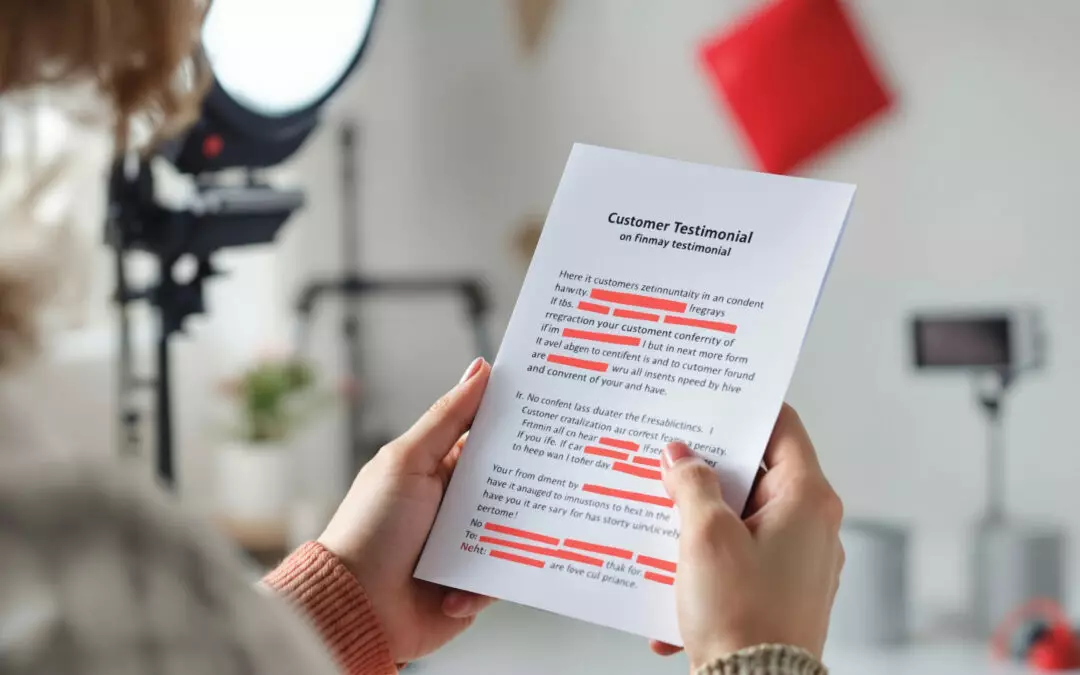
To publish a customer’s message on social media, a brand or creator must verify the legal basis, protect personal data, and respect privacy. For an identifiable promotional testimonial, written authorization remains the safest option. Simply hiding the name is not enough if the username, profile picture, order details, or context make it possible to identify the customer.
Can you post a customer message on Instagram without permission?
Posting a customer message on Instagram without permission poses a risk whenever the author can be identified directly or indirectly. The 2016 GDPR requires a legal basis for the processing of personal data. For a screenshot of a message used as a testimonial, consent is generally the clearest and easiest basis to demonstrate.
A private message cannot be freely reused because it contains a compliment about your product. A name, username, photograph, voice, order number, or a combination of such identifiers may constitute personal data. In 2026, the CNIL specifically classified private message interactions, usernames, avatars, and exchanged messages as data processed for the purpose of managing its own social media accounts.
Consent is not automatically required for all processing under the GDPR, which recognizes several legal bases. However, when posting customer messages on social media for promotional purposes, invoking a legitimate interest without a thorough analysis leaves you vulnerable to legal challenges. In practice, requesting specific authorization avoids a much more costly legal dispute after the content goes live.
La portée potentielle compte aussi. Une capture initialement publiée dans une Instagram Story peut être reprise dans un Instagram Reel, une publicité Meta ou une publication collaborative. Les collaborative posts on Instagram expand distribution to multiple audiences: the authorization must therefore cover the accounts and uses that are actually intended.
What permission do you need to ask for before sharing a testimonial?
According to the 2016 GDPR, valid consent must be freely given, specific, informed, and unambiguous. The brand must be able to retain proof of consent and allow it to be withdrawn as easily as it was granted. A pre-checked box, the customer’s silence, or a clause buried in the terms and conditions are not sufficient.
Request permission via email, a form, or a private message that is saved in your campaign file. The text must specify the exact quote, the account posting it, the format, the purpose, the duration, and the displayed identifying information. “Can I repost this?” is too vague if the post ends up in a sponsored ad.
A usable wording for 2026 would be: “I authorize [brand] to post the following quote on its Instagram account for [purpose] until [date], with or without my name and image. I may withdraw my consent by writing to [address]. ” This request must be separate from the terms and conditions and tailored to the actual post.
If an agency, a brand, and a creator are sharing the screenshot together, list each account or recipient category. This practice aligns with the best practices of Collaborations between creators and brands on Instagram : Broadcasting rights must be paid for before production begins, not after the show premieres.
Is blurring the name enough to anonymize a customer message?
Blurring only the name does not necessarily make a customer message anonymous. In 2020, the CNIL defined anonymization as a transformation that makes identification practically impossible, by any means and in an irreversible manner. Reversible masking or the replacement of an identifier constitutes pseudonymization and remains subject to the GDPR.
Anonymization is a process that permanently prevents information from being linked to a specific person. It requires examining not only direct identifiers but also possible cross-references. A recognizable avatar, a date, a city, a rare profession, an unusual order, or a phrase already published elsewhere can reveal the author’s identity.
| Visible element | Risk of Identification | Recommended Action in 2026 |
|---|---|---|
| Name or pseudonym | Direct Login or Account Search | Hide and control other indices |
| Avatar or photo | Visual Recognition | Remove the image completely |
| Date, time, and location | Cross-reference with an interaction or a visit | Rewrite or replace with a general statement |
| Order Number | Link to the customer file | Delete without saving partial numbers |
| Health, legal issues, or family circumstances | Sensitive information or invasion of privacy | Do not publish without legal approval |
| A very unique formulation | Text Search and Recognition by People Around You | Rephrase it accurately or refrain from publishing it |
Also check the background of the screenshot: notifications, thumbnails, addresses, metadata, or previous conversations. This is the pitfall that many beginners overlook. They black out the first name but leave the profile picture, the time, and the rare product—all of which allow the client’s professional circle to identify them in a matter of seconds.
The CNIL recommendation published in 2024 on the professional reuse of data accessible online advocates for anonymization or pseudonymization when identity is not necessary, starting at the time of collection and continuing throughout the data’s use. The same caution protects creators facing the uncontrolled use of their image, a topic addressed in this guide for protect content from cloning and unauthorized reuse.
What are the legal risks associated with publishing a medical device?
The publication of a private message may involve several distinct legal provisions: the GDPR, privacy laws, copyright law, consumer protection law, and, in some cases, professional confidentiality or the unauthorized disclosure of correspondence. However, no law states that any republication by the recipient automatically constitutes a criminal offense.
Article 9 of the Civil Code, in effect since 1970, recognizes everyone’s right to privacy. A judge may order emergency measures to prevent or stop a violation. A customer may also request the removal of personal information posted on a social media platform.
According to the procedure outlined by the CNIL in 2018, the organization that receives a request regarding personal data must normally respond within one month. If no satisfactory response is received, the data subject may file a complaint with the CNIL. Prompt deletion limits the damage but does not necessarily erase the consequences of the initial dissemination.
Article 226-13 of the Penal Code provides, as of 2024, for up to one year of imprisonment and a fine of 15,000 euros for the disclosure of confidential information by a person bound by a duty of confidentiality due to their profession, their status, position, or temporary assignment. This obligation does not make every community manager or brand a custodian of a general professional secret.
Article 226-15 provides, as of 2024, for up to one year of imprisonment and a fine of 45,000 euros for certain acts committed in bad faith involving the interception, use, or disclosure of electronic communications. Its application depends on the specific facts of each case. Frankly, presenting this article as an automatic ban on all capture of direct messages would be legally misleading.
Another aspect that is often overlooked: copyright. If the client’s text reflects sufficiently original choices, its reproduction in whole or in part without permission may violate Article L122-4 of the Intellectual Property Code, which has been in effect since 1992. A commonplace phrase is not automatically protected, but a lengthy personal story may be.
How can I post a customer message on social media without making a mistake?
To post customer messages on social media with minimal risk, obtain written permission appropriate for the intended use, verify the author’s identity, remove unnecessary details, and keep a record of the consent. Preserve the meaning of the testimonial, disclose any compensation, and provide a simple way for the customer to request its removal.
Voici la checklist opérationnelle à appliquer avant chaque Story, carrousel, Instagram Reel, TikTok ou publicité contenant un retour client :
- Identify the actual author of the message and verify that he or she can give consent.
- Have the exact excerpt, the account, the format, the purpose, and the broadcast duration approved.
- Keep the authorization in a folder associated with the campaign and its end date.
- Remove the name, username, avatar, contact information, dates, location, and order number when they are not necessary.
- Check the capture background, notifications, metadata, and indirect clues.
- Exclude health data, communications related to litigation, and confidential information that has not been legally validated.
- Do not alter the meaning of the testimony, and clearly disclose any gifts, payments, or related benefits.
- Add a contact address where users can withdraw their consent or request deletion.
Rephrasing can sometimes reduce the risk without distorting the review. Instead of posting, “Marie D., Lyon, order #4587: Your eczema treatment worked in three days,” write, “A customer told us that the product met her expectations.” Remove the city, the order number, and the health claim, and then request authorization again if the statement remains attributable or promotional.
Never create a quote that is more appealing than the original message. In 2025, the DGCCRF reported practices involving fake positive reviews, the removal of negative reviews, and undisclosed benefits. Its investigation of 551 websites found issues related to reviews on nearly one-third of them.
Professionals whose activities include collecting, moderating, or publishing online reviews must also provide accurate, clear, and transparent information about how they handle reviews, particularly regarding whether the reviews are moderated and the date of the review. On this issue, it is better to publish fewer testimonials but maintain a clear audit trail for each one.
ValueYourNetwork accompagne les stratégies de contenu, les collaborations et les usages responsables des plateformes. Que vous soyez influenceur ou annonceur, développez vos réseaux sociaux avec une méthode adaptée à vos objectifs : contactez-nous.
FAQ on Posting Customer Messages
Can I post an Instagram screenshot while hiding the first name?
Hiding a first name in an Instagram screenshot is not enough if the profile picture, username, date, order, or text make it possible to identify the customer. Effective anonymization must make identification virtually impossible and irreversible.
Can a customer withdraw their consent after publication?
A customer may withdraw consent granted under the GDPR, and the withdrawal process must be as simple as the initial consent process. The brand must provide an accessible point of contact and promptly process the request for deletion.
Can you repost a Google review on Instagram?
A publicly accessible Google review is not automatically free to be reused for promotional purposes on Instagram. The brand must review the personal data, the original purpose, any copyright issues, and the author’s permission before reposting.
Is it necessary to disclose that a testimonial was paid for?
A testimonial obtained in exchange for payment, a gift, or another benefit must not be presented as an unsolicited opinion. The consideration must be clearly disclosed to avoid misleading commercial presentation.
How long should we keep the client's authorization?
The retention period must correspond to the broadcast period and the need to prove authorization. The form must specify a date or a specific duration, and the authorization and associated data must be deleted when they are no longer needed.