
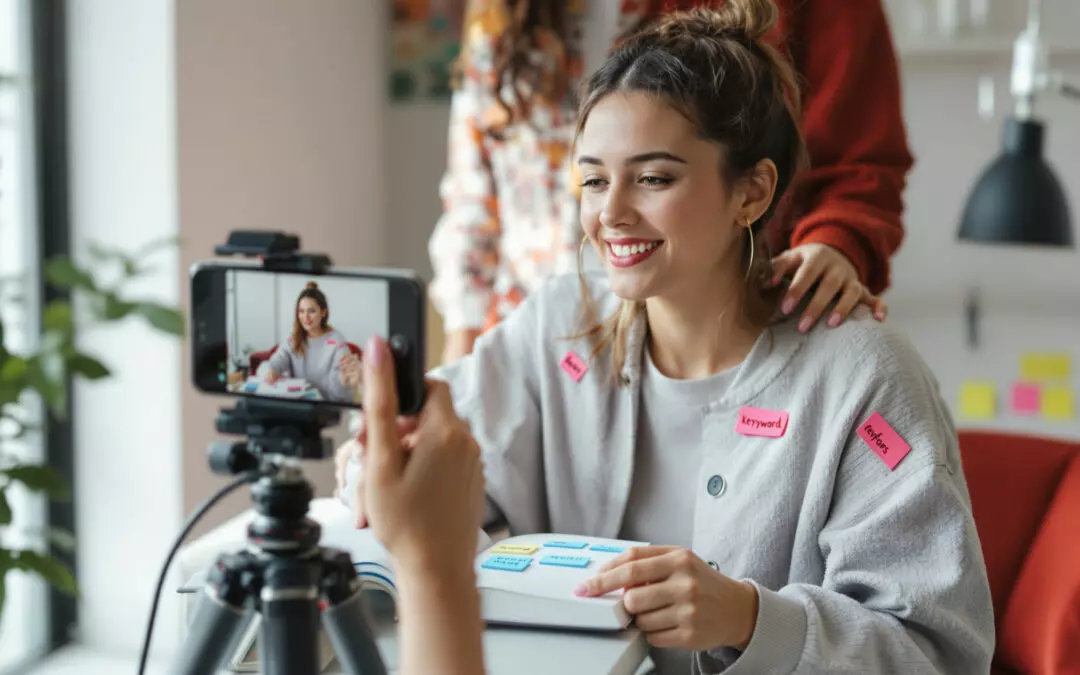
Instagram SEO 2026 consists of placing your keywords where Instagram can understand them quickly: display name, bio, the first lines of the caption, relevant hashtags, alt text, and Reel context. The on-the-ground priority: write the way your followers search, not like an SEO robot. A local food creator should target “vegan pastry shop Paris” before “artisanal treat.” Simple. Measurable.
Instagram SEO 2026: The Placements That Really Matter
Since 2015, Instagram has evolved from a relatively closed social feed to an internal discovery engine, and then to a source that is potentially visible on Google for certain public content. By 2026, expert guides will focus on five key areas: the profile’s display name, the bio, captions, hashtags, and image alt text.
Meta’s documentation also confirms a point that is often underestimated: eligible public Instagram photos and videos, published since January 1, 2020 by public professional accounts belonging to adults, can be indexed by third-party search engines. This is not automatic for everyone. But for a brand, a creator, or a media outlet, it changes how you write a caption.
My take: The best Instagram SEO for 2026 is less like a technical checklist and more like an editorial discipline. You need to label things clearly. A Reel titled “My Morning Routine” will be less clear than one titled “Skincare Routine for Sensitive Skin.” Instagram, like TikTok or YouTube Shorts, understands content better when the message is repeated without being overemphasized.
Instagram Profile: Name, Bio, and Tagline
The “Name” field—or display name—remains one of the most effective places to include a keyword. There’s no need to sacrifice your identity. A profile can be named “Claire Martin | LinkedIn Coach” or “Maison Arvo | Silver Jewelry”: the brand is still there, and so is the category.
Your bio should answer three questions: what you do, who you do it for, and what reasonable evidence or promise you offer. Avoid poetic bios if your goal is to be found. “Quick vegetarian recipes for busy families” beats “joyful meals every day,” especially in search results.
A common pitfall: changing your display name every two weeks to follow a trend. Bad idea. You’re muddying the signal, making it harder for the algorithm to remember you, and giving it less thematic consistency. On Instagram, smart repetition is better than constant change.
To put this work into the context of a broader strategy, keep an eye on how social media platforms evolve in 2026: Instagram no longer sees itself in isolation; it compares itself to TikTok, YouTube, Snapchat, and LinkedIn in terms of how users search for content.
Captions: Where to Place the Keyword Without Dampening Engagement
The caption has become a key area for editorial indexing. Several sources from 2026 cite it as a major focus for Instagram research, with a clear recommendation: write naturally, using everyday language, rather than cramming in a bunch of phrases.
Include your main keyword in the first sentence when it flows naturally. Not to “trick” Instagram, but because the first few lines provide context for both the reader and the platform. Example: “Instagram SEO 2026: Here’s how I optimize a fashion designer’s bio before a campaign.” It’s clear, and it still feels human.
Next, use variations. If the topic is “vegan restaurant in Lyon,” alternate with “plant-based spot in Lyon,” “vegan brunch,” and “creative vegetarian cuisine.” Creators who succeed over the long term do this naturally: they speak in the way their community searches.
Hashtags are no longer a substitute for a clear caption. Sprout Social noted in 2026 that important hashtags are better placed in the caption rather than in the first comment for better indexing. Honestly, on the accounts I analyze, hashtags are mainly used to confirm the topic, not to salvage a poorly worded post. To learn more about this specific point, read our analysis on The Use of Instagram Hashtags in 2026.
| Location | Recommended SEO Practices for 2026 | Common mistake |
|---|---|---|
| Display Name | Associate a brand or personal name with a searched-for category | Using only a vague slogan |
| Bio | Describe the activity using simple, searchable words | Overwriting with Abstract Formulas |
| Caption | Introduce the topic in the first few lines, then vary your vocabulary | Repeat the same keyword five times |
| Hashtags | Choose a few tags that are specific and relevant to the content | Copy a generic list of 30 tags |
| Alternative text | Describe the image accurately for accessibility and context | Filling it with hidden keywords |
Reels, captions, and on-screen text: context makes all the difference
Reels raise a more subtle question. The 2026 guidelines recommend mentioning the keyword early in the video and adding on-screen text and captions, but the available official documentation does not clearly confirm the exact weight of audio or on-screen text as a ranking factor. So, proceed with caution.
In practice, I still recommend it. Why? Because the text on screen improves immediate comprehension, subtitles keep viewers engaged even without sound, and a clear spoken prompt reduces ambiguity in the content. Even if the exact algorithmic signal remains unclear, the benefit to users is obvious.
A good SEO Reel starts before editing. Displayed title: “3 Instagram SEO Mistakes in 2026 in Your Bio.” First spoken line: “Your Instagram bio isn’t indexable if no one understands your niche.” Caption: “Quick audit of an Instagram bio for beauty creators.” Everything ties together.
This principle aligns with the visibility mechanics of Reels that we monitor regularly, particularly with Instagram’s new Reels selection system for 2026. And if you’re comparing your efforts to TikTok, our guide TikTok Marketing and Visibility clearly shows that all platforms prioritize a clear context, but not using the same conventions.
Alternative text: useful, accessible, but not magic
Instagram's alternative text can be edited manually before posting via the accessibility options, and also after posting, according to Instagram's help center. This is a valuable field, primarily for accessibility. People who use screen readers need to understand what is shown in the image.
In 2026, Later warned about something I completely agree with: stuffing the alt text with keywords hurts accessibility and doesn’t really help your ranking. Write an honest description. “Creator filming a skincare Reel with a vitamin C serum in front of a bright window” is better than “skincare skincare face serum beauty Instagram SEO.”
For carousels, describe each image whenever possible and appropriate. An educational carousel about an influencer strategy may include clear headings, but the alt text should also summarize the visual information. This is particularly important for brands that want to balance performance with editorial responsibility.
A Simple Way to Optimize a Post Before Publishing It
A quick process is all it takes. Before you post, ask yourself just one question: If someone were searching for this content on Instagram, what words would they actually type? Not your internal jargon. Their words.
- Choose a realistic primary keyword: niche, intent, location, or format.
- Include it in the displayed name or bio if it's a recurring theme.
- Incorporate it naturally into the first sentence of the caption.
- Add 3 to 8 specific hashtags, depending on the niche, rather than generic ones.
- Please provide descriptive, useful, and accessible alternative text.
- On Reel, provide context through speech, captions, and on-screen text if it enhances the video.
The classic counterargument is that engagement matters more than keywords. That’s true, but it’s not the whole story. A well-titled post may be better understood from the start, and then engagement confirms—or refutes—its relevance. SEO and creativity aren’t at odds; above all, they prevent your best content from being ranked poorly.
For advertisers, this approach also makes it easier to create an influencer brief. Instead of asking, “Post something that looks natural,” provide three priority phrasings, two variations, and any prohibited terms. Influencer campaigns become more consistent, especially when multiple creators are covering the same launch. This is exactly the kind of guidance we incorporate into our Influencer marketing strategies with creators.
If you're working in a competitive niche, also analyze the content that already appears in Instagram search results. Look at their profile names, opening lines, hashtags, and formats. Then set yourself apart. Copy the structure, but never the voice.
ValueYourNetwork supports creators, brands, and social media teams with their social media strategies, from Instagram audits to measurable influencer campaigns; whether you are an influencer or an advertiser, contact us to grow your social media with a methodical approach.
Instagram SEO FAQ 2026
Where Should You Place Your Instagram Keywords in 2026?
Include them in the displayed name, bio, the first few lines of the caption, relevant hashtags, and alt text. For Reels, also provide clear context through subtitles, spoken dialogue, and on-screen text.
Do Instagram hashtags still help with SEO?
Yes, but they're no longer enough. In 2026, it's better to include a few specific hashtags in the caption than a long, generic list that's been copied and pasted.
Does Instagram's alternative text help with search visibility?
It can help Instagram better understand an image, but its primary purpose is still accessibility. Describe what’s visible without stuffing in keywords.
Can Instagram posts appear on Google?
Yes, certain eligible public content from public business accounts may be indexed by third-party search engines, according to Meta's help center. This applies in particular to posts and Reels published on or after January 1, 2020.