
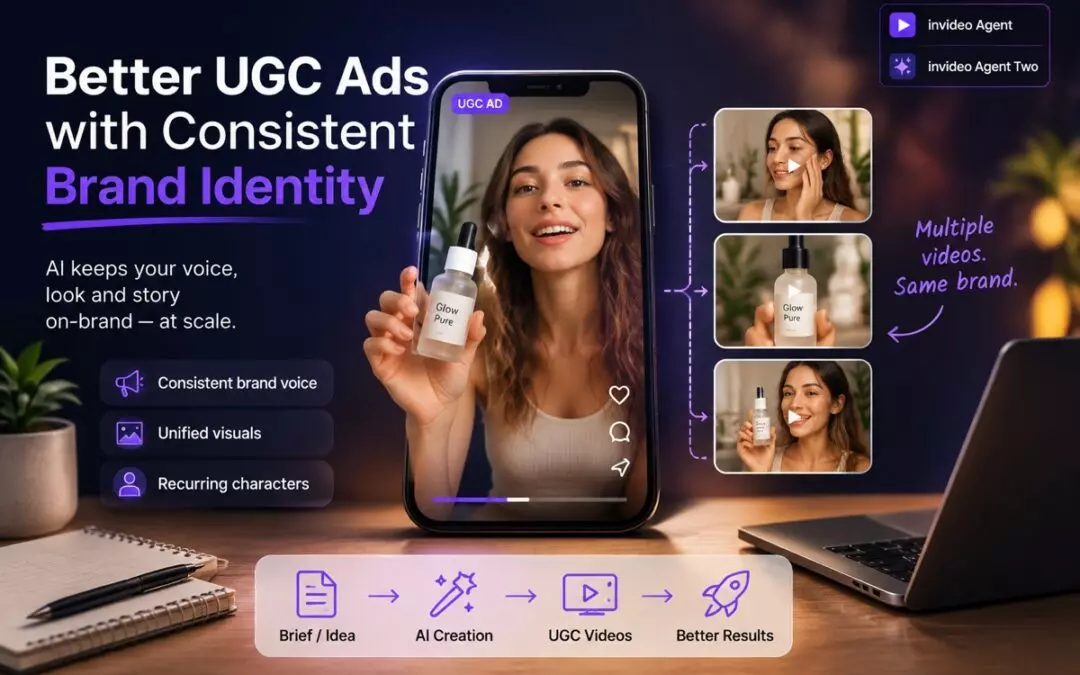
User-generated content (UGC) ads have become one of the most effective formats for modern digital advertising. Their success comes from their ability to feel personal, authentic, and relatable. Instead of looking like traditional commercials, UGC ads often feel like recommendations from real people, which helps brands build trust and connect with audiences.
However, as brands increase their UGC production, maintaining consistency becomes a major challenge. A campaign may involve multiple creators, different scripts, various products, and dozens of video variations. While each video may perform well individually, inconsistent messaging, visuals, or brand tone can make the overall campaign feel disconnected.
This is where AI is changing the way brands approach UGC advertising. AI-powered workflows can help brands create more content while maintaining important elements such as brand voice, visual style, recurring characters, and campaign direction.
The goal is not to make every UGC ad look identical. Instead, AI helps brands create content that feels naturally different while still belonging to the same brand universe.
Why Brand Identity Matters in UGC Ads
UGC ads work because they feel authentic, but authenticity does not mean a brand should lose its identity.
A successful UGC campaign still needs recognizable elements that connect every video back to the company. These elements include:
- Brand voice
- Visual style
- Messaging approach
- Product presentation
- Recurring characters or creators
- Emotional tone
Without consistency, audiences may see multiple ads from the same brand but fail to recognize the connection between them.
For example, a skincare brand may create one UGC ad focused on customer confidence, another focused on product benefits, and another featuring a creator testimonial. While the storytelling approach can change, the overall tone, product positioning, and visual identity should remain connected.
How AI Helps Maintain Brand Voice Across UGC Campaigns
Brand voice is more than the words used in an advertisement. It includes the personality, tone, and emotional style behind the message.
A luxury brand may use a more refined and premium tone, while a fitness brand may prefer energetic and motivational communication.
When brands produce large volumes of UGC ads, maintaining this voice across every script can become difficult. Different creators may interpret messaging differently, causing campaigns to feel inconsistent.
AI can help brands maintain a stronger communication style by supporting:
- Script development
- Messaging variations
- Audience-specific adaptations
- Consistent storytelling approaches
Instead of creating every script from scratch, teams can build content around a defined brand direction and adapt it for different audiences without losing the original identity.
Creating Consistent Visual Styles Across Different UGC Videos
Visual consistency plays an important role in making campaigns recognizable. Before production begins, brands often create visual mood boards to define elements such as color palettes, lighting styles, backgrounds, product presentation, and overall creative direction. These references help ensure that different UGC ads feel connected even when they feature different creators, formats, or campaign messages.
UGC ads often include different locations, creators, and formats, but certain visual elements should remain connected.
These can include:
- Product appearance
- Color palette
- Lighting style
- Background choices
- Editing approach
- Text and graphic styles
AI video workflows can help brands maintain these elements while producing different creative variations.
For example, an e-commerce brand may want multiple UGC ads showing different customer scenarios. Each video can have a unique story while keeping the same product presentation, visual quality, and campaign style.
The Challenge of Recurring AI Characters in UGC Ads
As AI-generated content becomes more common, brands are exploring digital creators and recurring AI characters for advertising.
However, creating a character once is easier than maintaining that character across multiple videos.
A recurring AI actor needs consistency in:
- Facial appearance
- Hairstyle
- Clothing style
- Personality
- Voice
- Movement style
If these details change between videos, the audience may not perceive the character as the same person.
AI workflows focused on context and continuity are helping brands create more reliable recurring characters that can appear across multiple campaigns.
How AI Helps Scale UGC Ads Without Losing Quality
One of the biggest advantages of AI in advertising is the ability to create more content without increasing production complexity.
Modern brands often need multiple versions of the same campaign for:
- Different audiences
- Different platforms
- Different product benefits
- Different stages of the customer journey
A single campaign idea may become:
- A short social ad
- A product testimonial
- A feature explanation
- A retargeting creative
- A marketplace video
AI helps teams adapt content faster while keeping the core campaign identity consistent.
This allows marketers to focus more on creative strategy and less on repetitive production tasks.
How AI Agents Support Consistent UGC Production
Creating UGC ads at scale requires managing many connected decisions. The product details, script style, visual direction, character choices, and editing approach all need to work together.
This is where AI agents are becoming useful for modern marketing workflows.
Invideo Agent helps brands move from a creative brief or product idea to complete video assets by supporting scripting, planning, visual development, generation, editing, and post-production. Instead of treating every video as a separate project, it helps maintain creative context across the workflow.
For UGC campaigns, this can help teams keep important decisions connected, such as brand style, product presentation, recurring characters, and overall campaign direction.
For larger campaigns, invideo Agent Two expands these capabilities through project memory and specialized expert agents that can support areas such as casting, cinematography, storyboarding, and VFX. This helps creative teams manage more complex UGC campaigns where consistency across multiple videos and variations becomes important.
AI Helps Brands Create More Personalized UGC Ads
Modern advertising is moving toward personalization. Different audiences respond to different messages, formats, and storytelling styles.
AI makes it easier for brands to create personalized versions of UGC ads without having to produce every variation.
For example, the same product can be presented differently to:
- First-time buyers
- Returning customers
- Different age groups
- Different geographic markets
- Different interest groups
The product and brand identity remain consistent, while the messaging changes based on audience needs.
Balancing Authenticity and Brand Control
One of the biggest concerns around AI-generated UGC is maintaining authenticity.
UGC works because it feels natural. Overly polished content can lose the personal connection that makes the format effective.
The best AI-assisted UGC workflows focus on supporting creativity rather than replacing it.
Brands still need to define:
- The story they want to tell
- The audience they want to reach
- The emotions they want to create
- The role of the product in the customer’s life
AI simply helps turn those ideas into more content while maintaining consistency.
The Future of AI-Powered UGC Advertising
The future of UGC advertising will likely combine human creativity with AI-powered production systems.
Brands will be able to create more personalized campaigns, develop recurring digital creators, and produce large volumes of video content while maintaining a recognizable identity.
The challenge will not simply be creating more videos. It will create better videos that feel connected, authentic, and aligned with the brand.
AI tools that understand creative context, remember decisions, and support end-to-end workflows will become increasingly valuable as brands continue to scale their video advertising efforts.
Final Thoughts
UGC ads are powerful because they feel real, but successful campaigns still require consistency. A strong brand identity helps audiences recognize, trust, and connect with the content they see.
AI is helping brands maintain that consistency by supporting brand voice, visual direction, recurring characters, and scalable production workflows.
The future of UGC advertising will not be about choosing between authenticity and efficiency. It will be about using AI to create more authentic content while keeping every video connected to the brand behind it.