
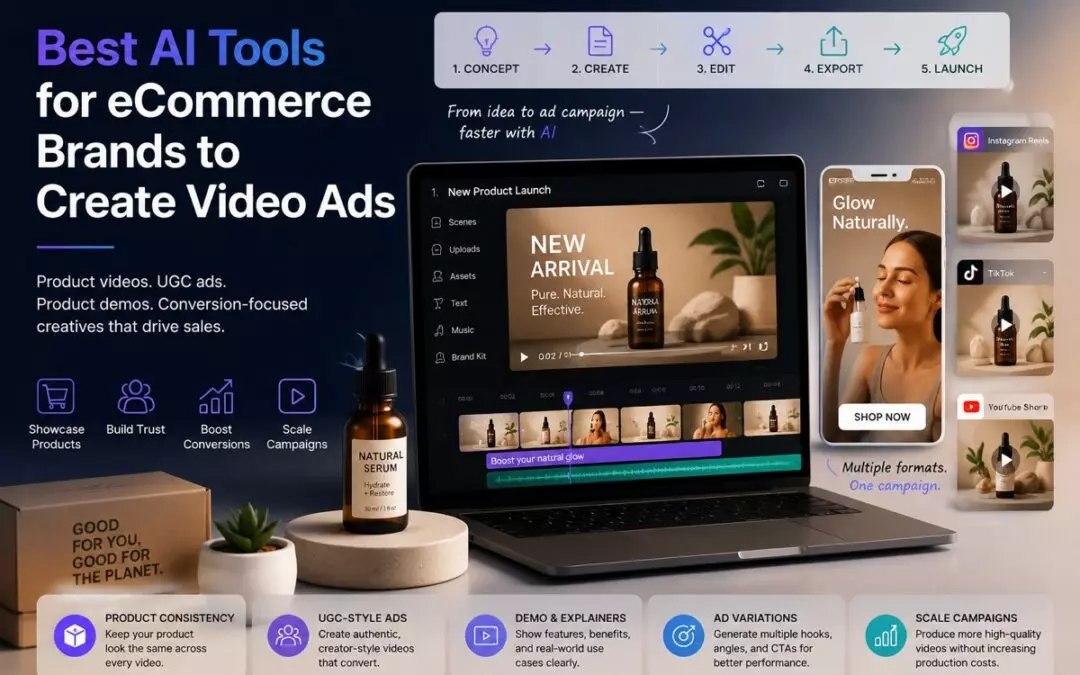
E-commerce brands today need more than product images and written descriptions to convince customers. With competition increasing across online marketplaces, social platforms, and paid advertising channels, video has become one of the most effective ways to showcase products, explain benefits, and build trust.
However, creating high-quality product videos at scale is not always easy. Traditional video production often requires planning, filming, editing, actors, locations, and multiple revisions. For e-commerce teams running frequent campaigns, this can slow down the process and make it difficult to create enough content for testing.
AI video tools are changing how brands approach product advertising. They help teams create product demonstrations, UGC-style ads, social media creatives, and campaign variations faster while reducing the effort required for production.
The best AI video tools for e-commerce do more than generate visuals. They help brands maintain product consistency, communicate key benefits, adapt videos for different platforms, and create multiple versions of ads for different audiences.
In this article, we look at the best AI tools e-commerce brands can use to create engaging video ads.
1. Invideo Agent
Invideo Agent is an AI video creation platform designed to help brands turn product ideas, marketing briefs, and campaign concepts into complete video workflows. Instead of focusing only on generating individual clips, it helps connect different stages of video production, including scripting, visual planning, generation, editing, and post-production.
For e-commerce brands, this is especially useful because product campaigns rarely require just one video. A single launch may need a hero product video, social media ads, UGC-style creatives, product explainers, and multiple variations for testing.
Invideo Agent helps teams develop these assets while maintaining consistency across the campaign. Brands can keep product details, visual style, messaging, and creative direction aligned while creating different versions for different audiences.
Key Features:
- Creates product videos from briefs, ideas, and references
- Helps develop UGC-style ads and product demonstrations
- Supports consistent product visuals across scenes
- Helps adapt videos for different social platforms
- Connects planning, creation, editing, and refinement workflows
Best For:
- E-commerce brands launching new products
- Marketing teams scaling video campaigns
- Performance advertisers testing multiple creatives
- Brands creating product-focused content regularly
For larger campaigns, invideo Agent Two extends these capabilities with project memory and specialized expert agents that support areas such as cinematography, storyboarding, casting, and AI visual effects. This helps teams maintain decisions around product presentation, campaign style, and creative direction when producing multiple videos across a larger e-commerce campaign.
2. Creatify
Creatify is an AI video advertising platform designed specifically around creating marketing videos from product information. It helps e-commerce businesses transform product details, images, and descriptions into video ads that can be used for social media campaigns.
The platform is built around performance marketing needs, where brands often need multiple versions of the same advertisement to test different hooks, messages, and customer segments.
For e-commerce teams, Creatify can be useful for quickly creating product-focused videos without needing a full production setup. Brands can experiment with different ad formats and messaging approaches while reducing the time required to create campaign assets.
Key Features:
- Product-to-video generation
- AI-generated ad creatives
- Marketing-focused templates
- Multiple video variations
- Social media ad formats
- Product storytelling workflows
Best For:
- E-commerce stores testing paid ads
- Product launch campaigns
- Small marketing teams
- Brands creating quick ad variations
Where It Falls Short:
Creatify is focused mainly on fast advertisement creation. Brands looking for deeper storytelling, complex scene planning, or long-term creative continuity may need additional production workflows.
3. HeyGen
HeyGen is an AI video platform focused on creating videos with digital avatars and AI presenters. It is commonly used by brands that want presenter-led videos without recording every piece of content manually.
For e-commerce brands, HeyGen can support product explainers, spokesperson videos, customer education content, and UGC-style ads where a consistent presenter introduces products.
A recurring AI presenter can help brands create multiple videos while maintaining the same on-screen personality. This can be useful for campaigns where the brand wants a recognizable spokesperson across different products or markets.
Key Features:
- AI avatar presenters
- Voice generation and voice cloning
- Multilingual video creation
- Script-based video generation
- Presenter-style marketing videos
Best For:
- Product explainers
- Educational e-commerce videos
- Presenter-led advertisements
- Global product campaigns
Where It Falls Short:
HeyGen works best for presenter-focused videos. Brands looking for more cinematic product storytelling, complex environments, or highly customized UGC scenes may require additional creative tools.
4. Runway
Runway is an AI video creation platform focused on generative video, creative editing, and visual experimentation. It is widely used by creators and creative teams looking to develop unique visuals and cinematic content.
For e-commerce advertising, Runway can help brands create visually interesting product campaigns by generating creative environments, lifestyle scenes, and attention-grabbing visuals around products.
It is particularly useful when brands want advertisements that go beyond traditional product demonstrations and create a stronger visual identity.
Key Features:
- AI video generation
- Image-to-video creation
- Generative editing tools
- Visual effects capabilities
- Creative scene generation
Best For:
- Premium product campaigns
- Creative advertising teams
- Lifestyle product videos
- Brand storytelling
Where It Falls Short:
Runway offers strong creative flexibility but is not specifically designed around e-commerce workflows. Maintaining product consistency across many ad variations may require additional planning and references.
5. Pika
Pika is an AI video generation platform focused on creating short, creative video content from text and images. It is commonly used for social media content, visual experiments, and quick creative concepts.
For e-commerce brands, Pika can help transform product images into engaging short videos that attract attention on social platforms. This can be useful for creating promotional clips, social teasers, and visually interesting product content.
Key Features:
- Image-to-video generation
- Text-based video creation
- Creative visual effects
- Short-form video generation
- Animation-style transformations
Best For:
- Social media product content
- Creative product teasers
- Brand awareness campaigns
- Short-form videos
Where It Falls Short:
Pika is better suited for creative short clips than complete e-commerce campaigns requiring detailed product storytelling, consistent characters, or multiple connected videos.
6. Canva AI Video Tools
Canva is a popular design platform that includes AI-powered features for creating marketing content, including social videos, advertisements, and promotional materials.
For e-commerce brands, Canva can be useful for teams that need to combine product images, text, graphics, and video elements into simple marketing creatives.
Its strength is accessibility, allowing small businesses and marketing teams to quickly create branded content without advanced editing skills.
Key Features:
- AI-assisted video creation
- Templates for advertisements
- Brand kit integration
- Product graphics and animations
- Social media formats
Best For:
- Small e-commerce businesses
- Social media teams
- Quick promotional videos
- Branded content creation
Where It Falls Short:
Canva is excellent for design-focused content but is less focused on advanced AI filmmaking workflows, character consistency, or complex product storytelling.
How AI Video Tools Help Ecommerce Brands Create Better Ads
AI video tools are changing how e-commerce brands approach advertising by making video production faster, more flexible, and easier to scale. Instead of creating a single advertisement and running it everywhere, brands can now develop multiple versions tailored to different audiences, platforms, and campaign goals.
These tools help marketers move from a basic product idea to complete video assets by supporting different stages of production. Brands can create product demonstrations, social ads, UGC-style videos, and promotional content while maintaining a consistent look and message throughout the campaign.
For e-commerce teams, the biggest advantage is the ability to create more content without increasing production complexity. This allows brands to test new creative ideas, respond to customer trends, and improve campaign performance more efficiently.
Creating More Product Video Variations
Successful e-commerce advertising often depends on testing different creative approaches. A product may perform better when presented through different hooks, storytelling styles, or customer benefits.
AI video tools allow brands to create multiple variations from the same campaign concept. For example, one version of a product video may focus on convenience, another may highlight product features, and another may use a customer-focused storytelling approach.
This flexibility helps marketing teams understand what resonates with different audiences while reducing the time needed to produce each variation. Instead of rebuilding campaigns from scratch, brands can adapt existing creative ideas into new formats.
Improving Product Demonstrations
Product demonstrations play an important role in e-commerce because customers cannot physically interact with products before purchasing. Videos help bridge this gap by showing how products look, work, and fit into real-world situations.
AI-powered workflows can help brands create clearer demonstrations by highlighting product features, showing different use cases, and explaining benefits through engaging visuals.
Whether it is a skincare product showing application steps, a technology product demonstrating features, or a lifestyle product shown in use, video allows customers to better understand the value of what they are buying.
Scaling UGC Ads for Ecommerce Campaigns
UGC ads have become popular because they feel more personal and relatable compared to traditional advertisements. However, producing enough UGC content for continuous testing can be challenging.
AI tools help brands create more UGC-style creatives by supporting different scripts, formats, and storytelling approaches. This allows teams to experiment with different hooks, customer perspectives, and product messages while maintaining a consistent campaign identity.
For brands running paid social campaigns, this ability to create and test multiple variations can help reduce creative fatigue and improve long-term campaign performance.
Keeping Brand Consistency Across Campaigns
As e-commerce brands create more videos across different platforms, maintaining consistency becomes increasingly important. Customers should recognize the same brand identity whether they see a product video on a website, a social media advertisement, or a retargeting campaign.
AI video workflows can help maintain consistency in areas such as product presentation, visual style, messaging, and overall campaign direction.
This becomes especially valuable for brands producing a large number of creative assets because it helps ensure every video feels like part of the same campaign rather than an unrelated piece of content.
How to Choose the Right AI Video Tool for Ecommerce
The right AI video tool depends on the type of content a brand wants to create and the complexity of its marketing workflow. Some tools are better suited for quick social media creatives, while others support more complete production processes involving planning, storytelling, and multiple campaign assets.
Ecommerce brands should consider factors such as product consistency, video formats, editing flexibility, scalability, and how easily the tool fits into their existing workflow.
For brands creating frequent campaigns, a workflow-based solution can be more valuable than a tool that only generates individual videos. The ability to maintain context, reuse creative decisions, and build multiple assets from one campaign idea can make the entire production process more efficient.
Final Thoughts
AI video tools are making it easier for e-commerce brands to create engaging advertisements without the limitations of traditional production workflows. From product demonstrations and UGC ads to social media creatives and campaign variations, AI helps brands produce more content while maintaining quality and consistency.
However, successful e-commerce videos still depend on strong creative direction. Understanding the audience, highlighting the right product benefits, and building a clear message remain essential.
The most effective approach combines AI capabilities with human creativity. Brands that can create consistent, relevant, and engaging video content at scale will be better positioned to capture attention and convert customers in an increasingly competitive e-commerce landscape.